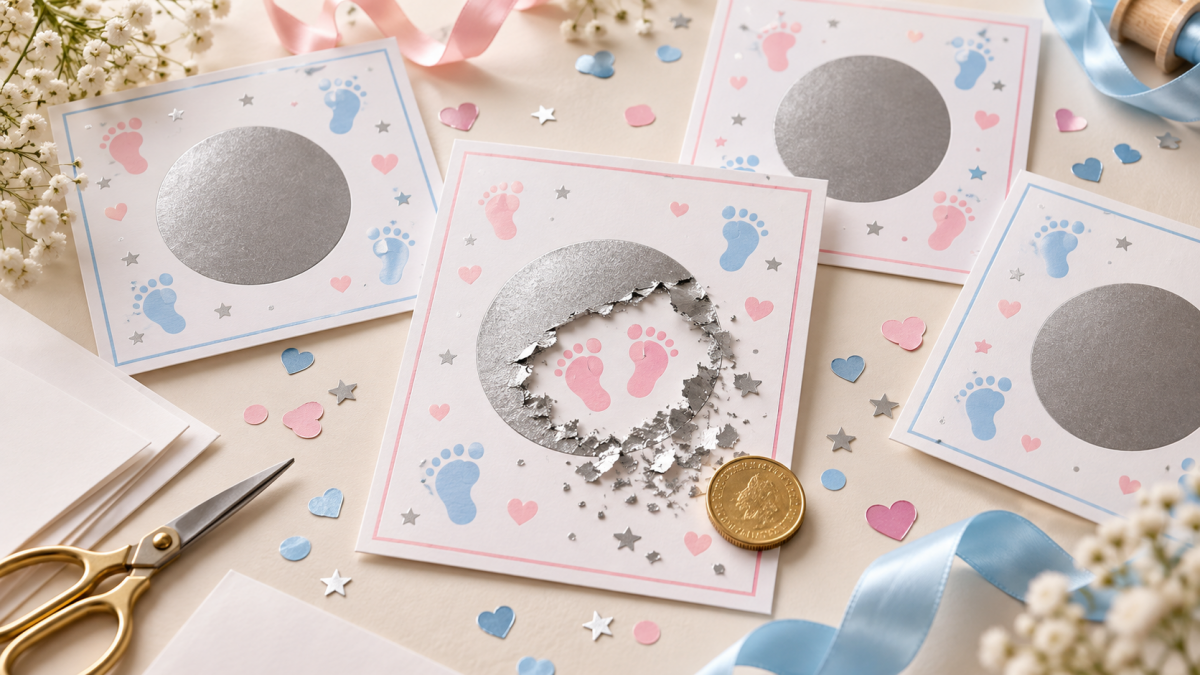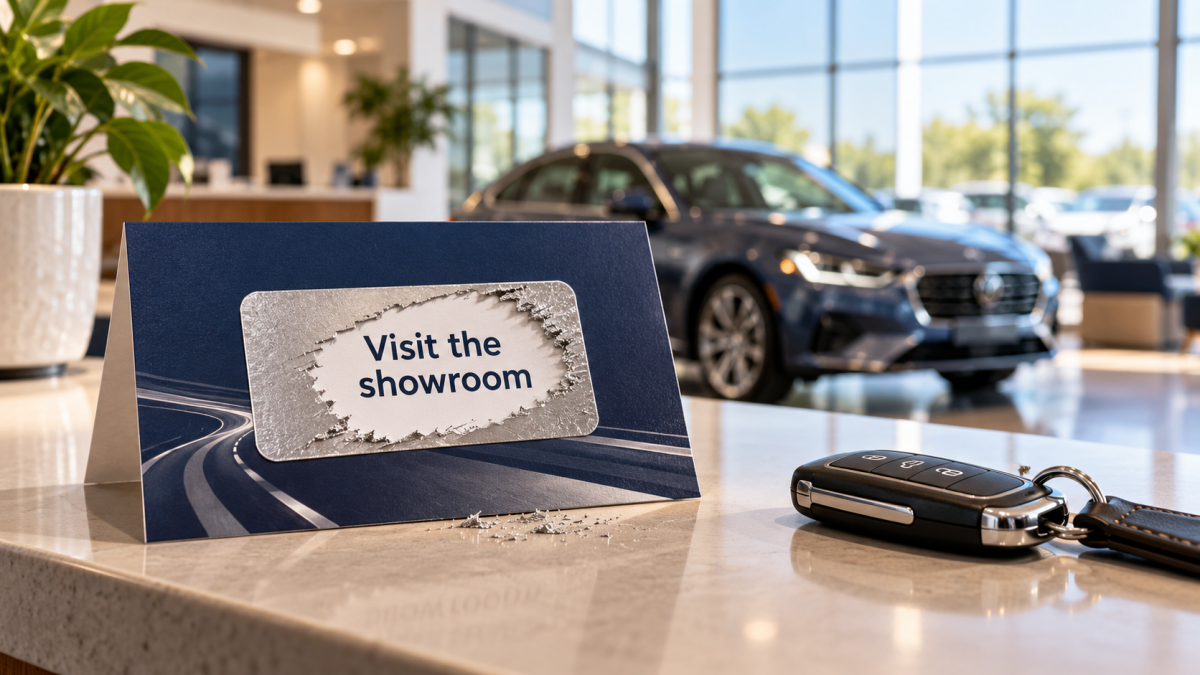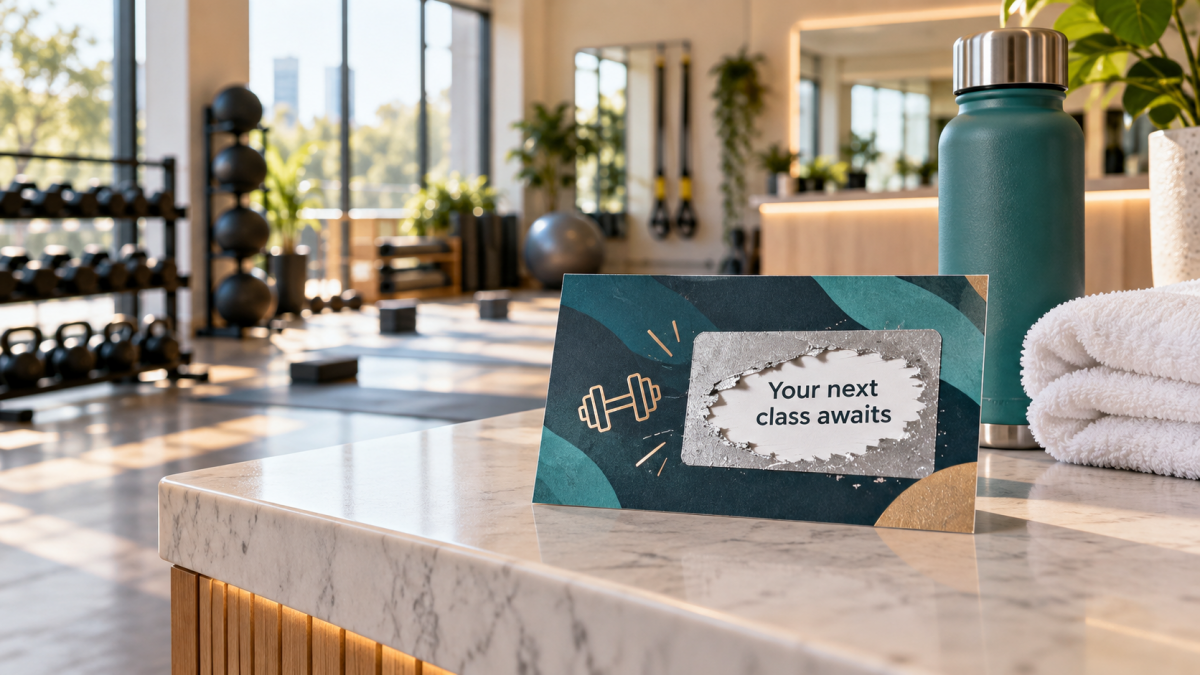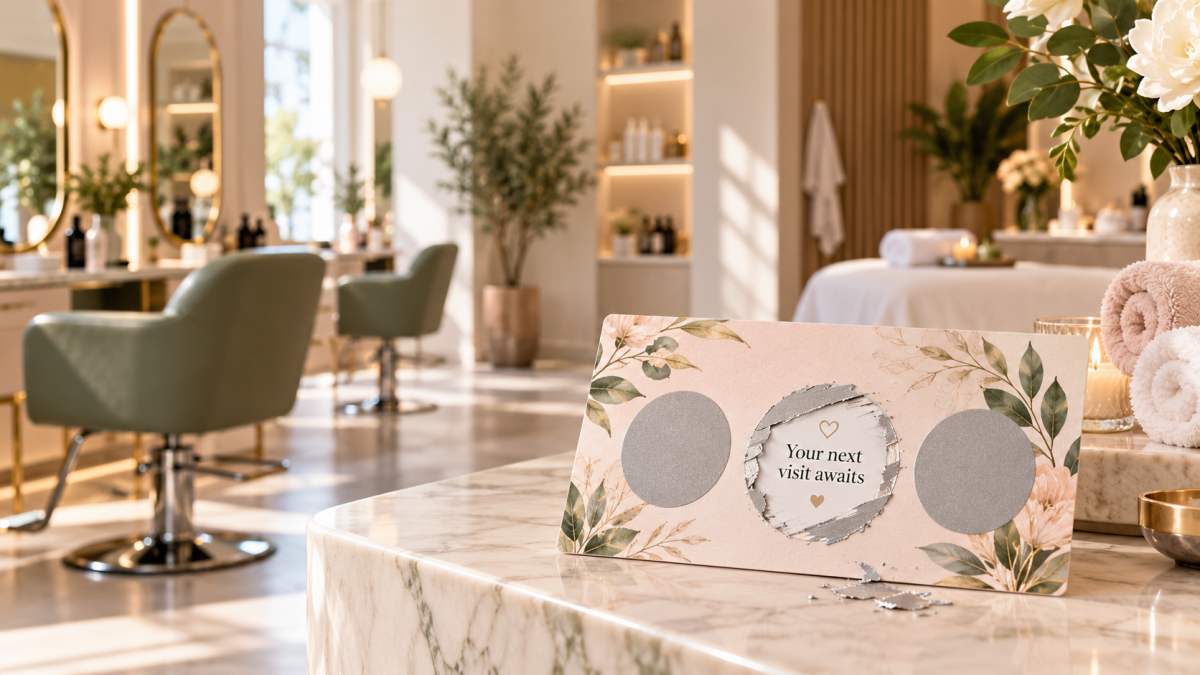
Categories
Uncategorized

Scratch Card Promotions: The Complete Guide to Ideas, Examples & Running a Winning Campaign

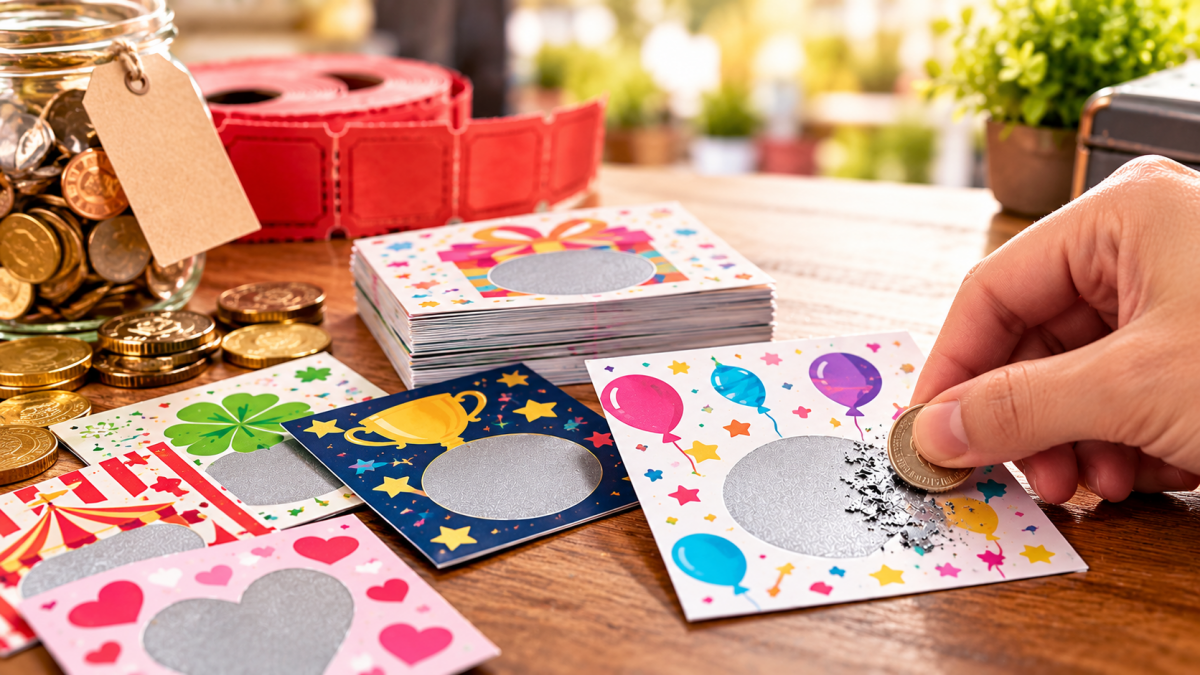
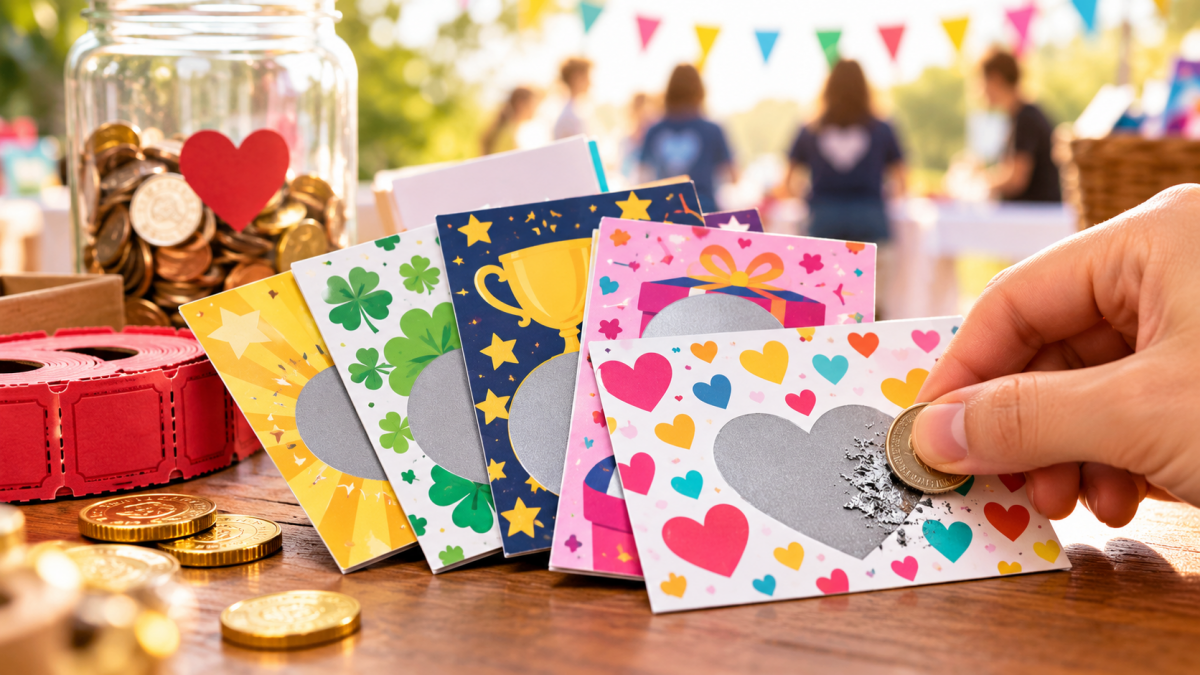
A scratch card promotion takes the same irresistible “I have to know if I won” instinct that powers lottery tickets and turns it into a marketing engine for your business. Hand someone a card with a hidden prize and they will scratch it — almost nobody can resist. That single behavioral fact is why scratch card promotions consistently out-pull plain coupons and ordinary mailers.

This guide is about the promotion itself — the campaign ideas, the prize structures, the real-world brand examples, and the step-by-step of running one that actually drives sales, foot traffic, leads, or loyalty. It’s the strategy companion to the more technical guides on where to print cards and how to make them; here, the focus is purely on what makes a scratch card promotion work.

Quick answer: What is a scratch card promotion? A scratch card promotion is a marketing campaign where customers scratch a hidden panel on a card to instantly reveal a prize, discount, or message. Businesses use them to drive foot traffic, boost sales, generate leads, reward loyalty, and create buzz. They work because the reveal mechanic triggers curiosity and excitement, producing 30–50% higher response rates than plain coupons or standard direct mail.


Why Scratch Card Promotions Work So Well

Scratch card promotions tap a behavioral principle borrowed straight from gaming: the thrill of a hidden, uncertain reward. The same “gambling” psychology that makes lottery scratchers so successful can be redirected into a marketing tool that gets customers to engage, act, and come back.

The numbers back it up. Interactive promotions like scratch off cards deliver 30–50% higher response rates than plain coupons or standard direct mail, and they can boost engagement by 40% or more. When added to direct mail, the scratch element revives a channel customers already trust — physical mail achieves roughly a 90% open rate versus 20–30% for email, and adding a tangible incentive lifts response further.

The mechanics that make it work:

  • Curiosity — a hidden panel creates an information gap the brain wants to close.
  • Anticipation — the few seconds of scratching build suspense no flat ad delivers.
  • Earned value — a discount someone wins feels more valuable than the same discount simply handed over, so they’re more likely to redeem it.
  • Guaranteed participation — by design, a scratch card requires the recipient to hold, view, and act on it.

Do scratch card promotions actually work? Yes. Interactive promotions like scratch off cards generate 30–50% higher response rates than plain coupons or standard direct mail and can lift engagement by 40% or more. The reveal mechanic compels participation — people almost always scratch a card they’re given — which is why everyone from local restaurants to major brands uses scratch card promotions to drive measurable results.


12 Proven Scratch Card Promotion Ideas

Here are the campaign types that work most reliably, organized by what they’re best at achieving.

Ideas That Drive Foot Traffic & Sales

  1. Mystery Discount. The classic. Every card hides a discount (e.g., 10%–50% off), but customers can only scratch to reveal it at your register or store. Because they’re guaranteed at least the minimum discount — with a chance at much more — it reliably pulls people in and seals the sale.
  2. Bounce-Back / Come-Back Campaign. Hand the card out as customers leave, telling them they can’t scratch it until their next visit. This manufactures a reason to return.
  3. Scratch, Match & Win. Customers scratch to find matching symbols; matches win a prize. Great for adding a game layer to a sale.
  4. Product Launch Buzz. Feature new products as the prizes to drive trial of those specific items.

Ideas That Generate Leads & Data

  1. Code-to-Enter (Digital Tie-In). The card reveals a unique code customers enter on a landing page or app to see if they’ve won — capturing email and contact data in the process.
  2. Scratch & Share (Social). Encourage winners to post their reveal with your hashtag for a bonus entry, driving organic reach.
  3. Trade Show / Event Capture. Hand a card to every booth visitor; they scratch at your booth and provide contact details to claim, collecting names and emails while creating buzz.

Ideas That Build Loyalty & Retention

  1. Frequent-Shopper Reward. Customers earn a scratch card after a set number of visits or a spending threshold (e.g., the fifth visit), revealing a reward.
  2. Collect-to-Complete. Hand out cards with each sale; once a customer collects enough to spell a word or reach a total, they claim a bigger prize.
  3. Customer Appreciation Day. Reward loyal customers with exclusive scratch-off deals on a special day.

Ideas for Internal & Community Goals

  1. Employee Safety / Incentive Program. Reward positive behavior or safety milestones with scratch cards — a documented use case for boosting morale and reducing incidents.
  2. Fundraiser / Seasonal Campaign. Tie scratch cards to a holiday or cause; themed designs (Valentine’s, summer, back-to-school, holidays) drive urgency, and December is a documented peak for scratch-off interest.

Real Brand Examples of Scratch Card Promotions

You don’t have to take the concept on faith — major brands have run scratch card promotions to hit specific goals. These examples (compiled from industry case studies) show the range.

BrandGoalWhat They Did
JCPenney & Macy’sDrive return customers“Mystery discount” scratch-offs distributed in mail, newspaper inserts, or at checkout
Wendy’sLaunch new products“Fresh-Made Breakfast” scratch, match & win promotion featuring new menu items as prizes
HeinekenGenerate leads“Skyfall 007 — crack the case” promotion; consumers revealed a code and entered it online
Papa John’sOnline redemption & dataScratch-off codes redeemed on their website for a specialty pizza
Liberty TaxUpsell servicesScratch-and-win cards offering discounts on credit monitoring, audit protection, and tax-return loans
Jackson HewittIn-store traffic“Lucky number match” — customers brought cards in store to match a number to an offer
BoschSales incentiveScratch-off cards based on tool sales, with guaranteed winning odds and 1,000+ prizes
MonsantoWorkplace safety“We caught you doing something SAFE AT WORK” reward cards

The pattern across all of them: define one clear goal first — sales, leads, launch buzz, or behavior change — then design the prize and the redemption rule to serve it.


How to Structure Prizes for a Scratch Card Promotion

The prize structure is where promotions are won or lost. The goal is to make everyone feel like a winner while protecting your margins.

The “Everyone Wins” Model

A proven framework is roughly 70% small prizes, 25% medium prizes, and 5% grand prize. Guaranteeing that every card reveals something keeps participation high and ensures people redeem rather than discard. Reserve the rare grand prize to create buzz, but make the common small prize genuinely worth claiming. Many printers let you set multiple prize tiers (often up to 6–10) and control the exact quantity of each, so you can engineer your odds and budget precisely.

What prizes should I put on a scratch card promotion? Use an “everyone wins” structure — about 70% small prizes (a free add-on, 10% off), 25% medium prizes (a free item, 25% off), and 5% grand prize (a big discount or free product). Common winning messages include “10% off,” “Free Gift,” “Buy 1 Get 1 Free,” “Free Appetizer,” and “$10 off your next $50 order.” Match the prize to your goal: discounts drive sales, free items drive trial, big prizes drive buzz.

Match the Prize to the Goal

  • Drive immediate sales → percentage or dollar discounts redeemable now.
  • Drive repeat visits → “next visit” offers and bounce-back rewards.
  • Drive trial → free samples or new-product giveaways.
  • Drive buzz → a rare, high-value grand prize worth talking about.
  • Reward employees → gift cards, paid time off, free lunch, or company swag.

Physical vs. Digital Scratch Card Promotions

Scratch card promotions come in two flavors, and many of the best campaigns combine them.

Physical cards are tangible, mailable, and ideal for in-store, direct mail, event, and packaging-insert promotions. They satisfy the desire for physical interaction and stand out in a mailbox.

Digital scratch cards are scratch-to-reveal experiences on a phone or website. They’re cheaper to distribute, eco-friendly, instantly shareable, and easy to tie to data capture and CRM systems. The most familiar example is the reward model used by payment apps: a Paytm scratch card, for instance, is a digital reward earned after an eligible transaction, found in the app’s “Cashback & Offers” section, which the user swipes to reveal cashback, points, or a voucher. Google Pay and PhonePe use the same mechanic. It’s a masterclass in using the scratch reveal to reinforce a desired behavior (making transactions) at massive scale.

The hybrid play: Put a QR code under a physical panel. The customer scratches, scans, and lands on a mobile page where they enter to win or redeem — combining the tactile thrill of paper with the tracking and data capture of digital.

Where do I find my Paytm scratch card? Open the Paytm app, tap “Cashback & Offers” on the home screen (or search “Cashback”), then select “Scratch Cards” to view cards you’ve earned. Swipe to reveal the reward — cashback, cashback points, or a voucher. Cards are typically credited within 24–48 hours of an eligible transaction and have an expiry date, so redeem them before they lapse.


Scratch Cards as Promotional Products

Beyond printed marketing cards, scratch-offs are a popular promotional-product category in their own right — handed out like branded swag at trade shows, events, and community functions. Promotional-product suppliers offer themed scratch cards (patriotic/American-made, sports-themed for big games, holiday designs), custom graphics printed on top of the scratch panel, and bulk discounts that deepen at tiers like 1,000, 3,000, 5,000, and 10,000 units. Because they’re affordable, interactive, and almost guaranteed to be engaged with, scratch cards make a booth the one people remember — and unlike a stress ball or pen, every card carries an offer that pulls the recipient toward your business.


How to Run a Scratch Card Promotion: Step by Step

  1. Define one clear goal. Sales, foot traffic, leads, loyalty, launch buzz, or behavior change. Everything else follows from this.
  2. Choose the mechanic. Mystery discount, match-and-win, code-to-enter, bounce-back, collect-to-complete — pick the one that fits the goal.
  3. Design the prize structure. Use an everyone-wins model; set tiers and quantities to control odds and budget.
  4. Set clear rules. Expiration date, eligibility (“one per customer,” “valid on purchases over $50”), and redemption instructions. Transparent terms prevent confusion and disputes.
  5. Add tracking. Unique codes or QR scans so you can measure redemption and attribute revenue.
  6. Choose distribution. In-store handout, direct mail, EDDM, packaging insert, event giveaway, or digital — matched to where your customers are.
  7. Promote the promotion. Amplify with social media, email, and in-store signage so people know to participate.
  8. Build in urgency. A deadline and a clear call to action drive timely redemption.
  9. Measure and iterate. Track redemption rates and revenue; refine the offer and prize mix for the next run.

How do I make a scratch card promotion successful? Start with one clear goal, then design the prize structure and redemption rule to serve it. Make every card a winner with an “everyone wins” mix, add unique codes or QR tracking to measure results, set a clear expiration date and call to action, distribute where your customers are, and amplify with social and email. Track redemption and refine for next time.

Common Mistakes to Avoid

  1. No clear goal. A promotion without a defined objective can’t be designed well or measured.
  2. Too many big winners. If everyone wins the grand prize, it’s just a margin-destroying markdown. Keep it rare.
  3. Weak offers. Even the smallest prize must feel worth claiming, or cards get tossed.
  4. No tracking. Without codes or QR scans, you can’t prove ROI or learn what worked.
  5. No expiration date. Urgency drives redemption; an open-ended offer gets forgotten.
  6. Unclear rules. Ambiguous terms cause disputes at the register and erode goodwill.
  7. Promoting a multi-prize award as a single lump sum. Be transparent that prizes are distributed across many winners.
  8. No call to action. Tell people exactly what to do after they scratch.

Frequently Asked Questions

What is a scratch card promotion?
A marketing campaign where customers scratch a hidden panel to reveal a prize, discount, or code. Businesses use them to drive sales, foot traffic, leads, and loyalty because the reveal mechanic compels participation.

Do scratch card promotions work?
Yes — they deliver 30–50% higher response rates than plain coupons or standard direct mail and can boost engagement by 40% or more, which is why brands from local shops to JCPenney, Wendy’s, and Heineken use them.

What’s a good prize structure?
An “everyone wins” mix of about 70% small prizes, 25% medium, and 5% grand prize. Guaranteeing every card wins something keeps participation and redemption high.

How much do scratch cards for a promotion cost?
Custom printed cards typically run about $0.12–$2.00 each depending on quantity and features, with bulk discounts at 1,000+. Digital scratch card promotions can be created with online tools for free or low cost.

What discounts should I offer?
Common winning offers include 10%–50% off, “Free Gift,” “Buy 1 Get 1 Free,” free food or service items, and dollar-off thresholds like “$10 off your next $50.” Match the offer to your goal.

Can I run a scratch card promotion online?
Yes. Digital scratch cards let users scratch to reveal on a phone or website, are easy to share and track, and can capture leads. You can also pair a printed card with a QR code for a physical-digital hybrid.

What is a Paytm scratch card?
A digital reward earned after eligible transactions in the Paytm app, found in “Cashback & Offers,” that you swipe to reveal cashback, points, or a voucher. It’s an example of a digital scratch promotion used to reinforce customer behavior at scale.

Where do I find my Paytm scratch card?
In the Paytm app, tap “Cashback & Offers” on the home screen, then “Scratch Cards.” Cards are usually credited within 24–48 hours of an eligible transaction and expire, so redeem promptly.

How do I track a scratch card promotion’s results?
Use unique codes or QR codes tied to a landing page so you can measure redemption, attribute revenue, and identify your best distribution channels.

Are scratch cards good for trade shows?
Very. As promotional products they almost guarantee engagement, draw visitors to your booth, and double as a lead-capture tool when redemption requires contact details.

How long should the promotion run?
Always set an expiration date to create urgency. Tie the window to your business cycle or a seasonal peak (December is a documented high point for scratch-off interest), and keep it short enough to prompt action.

Categories
Uncategorized

How to Make Your Own Scratch Card: 4 Easy Ways (Paint, Stickers, Printable & Digital)

There is a tiny, reliable thrill in scratching a silver panel to reveal what’s hidden underneath — and you can recreate it at home for a gift, a party game, a gender reveal, a classroom reward, or a way to ask someone to be your bridesmaid. The good news: making your own scratch card is genuinely easy, and there’s more than one way to do it depending on how much time you have and whether you want a physical card or a digital one.

This guide walks through all four methods, from the classic paint-and-dish-soap recipe to no-paint stickers, printable sheets, and free online scratch-card makers and apps. Each method includes exact steps, the supplies you need, and the little tricks that make the difference between a card that scratches cleanly and one that smears.

This is a make-it-yourself guide for personal projects. If you’re a business that needs hundreds or thousands of professionally coated, tamper-resistant cards for a marketing campaign, that’s a different job best handled by a professional printer — but for everything from a birthday surprise to a small promotion, the methods below are all you need.

Quick answer: What’s the easiest way to make your own scratch card? The fastest no-mess method is to write your hidden message on a card with permanent marker, then cover it with a pre-made scratch-off sticker — done in seconds. The classic homemade method is to mix two parts metallic acrylic paint with one part dish soap, cover your message with clear packing tape, and brush on two to three coats. For a digital version, use a free online scratch-card maker like Common Ninja, Drimify, or Priiize.


How a Scratch Card Actually Works (The 30-Second Version)

Every scratch card, homemade or professional, relies on the same simple trick: an opaque layer that won’t permanently bond to the surface beneath it, so it flakes away when scratched while leaving your hidden message intact.

In a factory, that layer is a latex or metallic scratch ink. At home, you recreate it one of two ways — either by mixing paint with dish soap (the soap stops the paint from gripping the slick surface underneath) or by using a sticker that already has a release film built in. Either way, the principle is identical: a slick barrier below, an opaque coating on top.

There’s a reason the reveal feels so satisfying, by the way. The slow uncovering triggers small releases of dopamine and a little anticipation-driven adrenaline as the result appears — the same neurological reward loop that makes professional scratch cards so engaging. You’re not imagining the fun; it’s wired in.


Method 1: The Classic Paint + Dish Soap Recipe

This is the original DIY method, perfect when you want to make a few personalized cards from scratch and don’t mind some drying time.

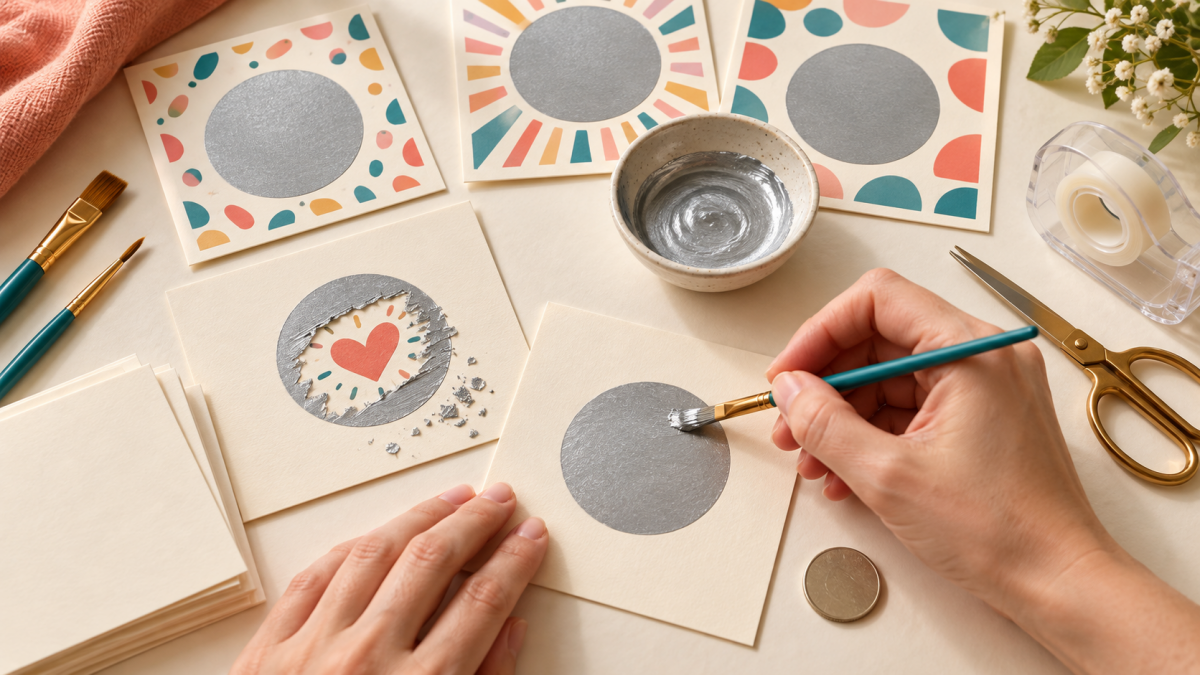
What is the scratch-off paint recipe? Mix two parts metallic acrylic paint to one part liquid dish soap (some crafters use equal parts). Stir until smooth. The dish soap stops the paint from permanently bonding to the slick surface beneath, so it scratches off cleanly. Apply two to three thin coats over a strip of clear packing tape placed atop your hidden message, letting each coat dry fully. Two coats is usually the sweet spot.

What You’ll Need

  • Cardstock or a pre-made card with your hidden message on it
  • Clear packing tape or clear contact paper
  • Metallic acrylic craft paint (silver, gold, or copper looks most “real”; any color works)
  • Liquid dish soap (hand-washing soap, not dishwasher detergent)
  • A small foam brush
  • A coin for scratching later

Step-by-Step

  1. Create your card and message. Write or print whatever you want hidden — a prize, a discount, a question, a gender reveal. Make sure the surface is smooth with no bumps.
  2. Cover the message with tape. Cut a piece of clear packing tape (or contact paper) slightly larger than your hidden message and press it down smoothly over the area. This slick layer is what lets the paint scratch off — without it, the paint bonds to the paper and won’t budge.
  3. Mix the scratch-off paint. Combine two parts metallic acrylic paint with one part dish soap in a small container and stir thoroughly until smooth. A teaspoon of each covers several small cards.
  4. Brush on thin coats. Apply the first coat over the tape with gentle, even strokes. It will look thin and streaky — that’s normal. Let it dry 30–45 minutes.
  5. Add a second coat in the opposite direction (cross-hatching) for full, opaque coverage so the message can’t be read through it. Two coats is usually ideal; a third can make it too hard to scratch.
  6. Let it cure. Allow at least two hours of drying, ideally overnight, before handling. A box fan speeds this up.
  7. Scratch to test. Use a coin to reveal your message.

Pro Tips

  • Use a stencil (a rectangle or heart cut from cardboard) over the tape so your painted area has clean edges and looks more professional.
  • If you want colored scratch-off instead of silver, just use colored metallic paint — the method is identical.
  • Slip a piece of wax paper over the finished card before mailing so the coating doesn’t stick inside the envelope, and tuck in a coin to help the recipient along.

Best for: A handful of heartfelt, fully handmade cards. Downside: Time-consuming, and results can be inconsistent — the coating can go on too thick, too thin, or peel unevenly.


Method 2: No Paint — The Scratch-Off Sticker Method

If the paint method sounds messy or unreliable, this is the shortcut. Pre-made scratch-off stickers are self-adhesive labels with a built-in scratchable coating (silver, gold, or colored) that completely conceals whatever’s underneath. No mixing, no drying, professional-looking every time.

How do you make a scratch card without paint? Write your hidden message on a card with a permanent marker, then peel and apply a pre-made scratch-off sticker directly over it, pressing from the center outward to remove air bubbles. That’s it — no paint, no mixing, no drying time. Scratch-off stickers come in rounds, rectangles, and full sheets, apply in seconds, and look consistent every time. Avoid pencil or pen, which can leave indentations that show through.

What You’ll Need

  • A blank card or paper
  • A fine-tip permanent marker (Sharpie) — not pencil or pen, which leave indentations that show through
  • Pre-made scratch-off stickers (sold on Amazon and from specialty makers in rounds from about 0.5″–2″, rectangles, and 8.5″ x 11″ sheets you can cut)

Step-by-Step

  1. Write your hidden message in the spot you want concealed, using permanent marker. Keep it short and clear.
  2. Let the marker dry completely.
  3. Peel a scratch-off sticker from its backing.
  4. Apply it over the message, pressing firmly from the center outward to eliminate bubbles and ensure full adhesion.
  5. Hand it out — and let the scratching begin.

Good to Know

  • Let stickers cure. Many manufacturers recommend allowing about 48 hours for the adhesive to fully cure before scratching, since they’re built to survive shipping.
  • Scratch with a coin, not a fingernail, which the makers note can damage the surface and prevent a clean reveal.
  • Stickers adhere best to smooth, flat cardstock — avoid glossy-coated, textured, or oily surfaces.
  • They’re mail-safe, so they hold up through standard postal handling.

Best for: Reliable, professional-looking results fast — parties, gender reveals, classroom rewards, small promotions. Downside: You’re limited to the sticker shapes and sizes available, and you pay per sticker.

Method 3: Printable Scratch-Off Sticker Sheets (Custom Designs)

Want the speed of stickers but with your own colors, patterns, or printed designs on the scratch layer? Printable scratch-off sticker material is the answer. These are sheets — white on the scratchable side, paper-backed on the other — that you run through your home printer, then cut by hand or with a cutting machine like a Cricut or Silhouette.

How It Works

  1. Design and print your artwork onto the white (scratchable) side of the sheet using a standard inkjet printer.
  2. Cut out the shapes — by hand with scissors, or with a cutting machine using registration marks so it cuts precisely around your printed design.
  3. Peel and stick each piece over the hidden message on your card.

This method gives you patterned or colored scratch panels instead of plain silver — you can match a party theme, print a logo, or make the scratch area any shape you like.

Best for: Crafters who want custom-branded or themed scratch panels in small batches. Downside: Requires buying special printable material and ideally a cutting machine for clean results.


Method 4: Make a Digital Scratch Card Online (Free Tools & Apps)

Sometimes you don’t want a physical card at all — you want a scratch-to-reveal you can text, email, or embed on a website. Digital scratch cards work exactly like the paper kind: the user drags a finger (on a phone) or mouse (on a desktop) across a virtual panel to uncover the prize, message, or code beneath.

Can I make a scratch card online for free? Yes. Free online scratch-card makers let you build a scratch-to-reveal in minutes with no coding. Popular options include Common Ninja (embeds on 200+ platforms like Canva, Shopify, WordPress, and Wix), Drimify and Priiize (gamification platforms with free trials), and simple browser-based generators. You design the card front, set the hidden prize, and share a link or paste an embed code. Most work on mobile and desktop automatically.

What Digital Makers Offer

  • No coding. Drag-and-drop editors; you design the front, set what’s hidden underneath, and publish.
  • Any hidden content. Text, an image, a coupon code, a link, or an HTML snippet — and you can usually change the prize later without rebuilding.
  • Mobile-first. The scratch interaction is built for touchscreens with a mouse-drag fallback on desktop.
  • Sharing or embedding. Share a link, or paste one line of embed code onto your website, newsletter, Canva design, or store.
  • Odds control (on advanced platforms). Tools like Drimify automatically smooth prize distribution across a campaign’s dates and prize count, recalculating the odds as prizes are won.

Popular Free / Freemium Tools

  • Common Ninja Scratch Card Maker — free, no-code, embeds on 200+ platforms in under five minutes.
  • Drimify — HTML5 gamification platform with a free build-and-test trial; paid plans unlock white-labeling and custom URLs.
  • Priiize — digital scratch-off platform aimed at promotions, with prize-claim forms and CRM integrations.
  • Embeddable / Scratchable / browser generators — quick scratch-to-reveal widgets, some AI-assisted, several with free tiers.
  • Gift apps (e.g. scratch-to-reveal virtual gift makers) — for sending a fun personal surprise by link.

“How do I make a scratch card on my phone?”

You don’t need a dedicated app — most digital scratch-card makers are mobile-friendly websites. Open the maker in your phone’s browser, design the card, and share the link. The recipient scratches with their finger. If you specifically want an app, gamification platforms and several “scratch card maker” apps in the iOS App Store and Google Play offer the same build-and-share flow.

Best for: Online promotions, email list-building, social sharing, remote gender reveals, eco-friendly campaigns (no paper or shipping). Downside: It’s a screen experience — there’s no physical card to hold or mail.

Which Method Should You Use?

MethodTimeSkillCostBest For
Paint + dish soapHigh (hours of drying)Low–mediumVery lowA few handmade, heartfelt cards
Scratch-off stickersVery lowVery lowLow (per sticker)Fast, reliable, party/event quantities
Printable sheetsMediumMediumMediumCustom-designed/themed scratch panels
Digital makerLowLowFree–freemiumOnline, mobile, shareable reveals

What’s the most reliable way to make a scratch card at home? Pre-made scratch-off stickers are the most reliable physical method — they apply in seconds and look consistent every time, with none of the thickness, peeling, or drying problems of homemade paint. The paint-and-dish-soap method is the most budget-friendly and fully customizable, but it’s slower and less predictable. For an instant, shareable version, a free digital scratch-card maker is the most reliable of all.


Fun Ways to Use Your Homemade Scratch Cards

The reveal mechanic works for almost any surprise. Ideas people love:

  • Gender reveals and pregnancy announcements — hide “It’s a girl!” under the panel.
  • “Will you be my bridesmaid / best man?” proposals.
  • Birthday and holiday gifts — hide a message, a gift amount, or an experience (“Concert tickets!”).
  • Classroom and kids’ rewards — teachers use them as incentive cards.
  • Small-business thank-yous — tuck a “secret savings” card (10%–25% off next order) into shipped orders.
  • Party games and trivia — hide answers, bingo squares, or “you won” cards.
  • Advent calendars — number 24 scratch panels, hide a daily activity under each.
  • Date-night jar — write restaurants or activities under panels and scratch to decide.

Common Mistakes (and How to Avoid Them)

  1. Skipping the tape or release layer. Without a slick barrier, homemade paint bonds to the paper and won’t scratch off. Always tape first.
  2. Using pen or pencil for the hidden message. The indentation shows through the coating or sticker. Use a permanent marker and let it dry.
  3. Painting one thick coat. Thick coats stay gummy and scratch poorly. Use two to three thin coats with drying time between.
  4. Not letting it cure. Both paint and stickers need curing time (a couple of hours for paint; up to 48 hours for sticker adhesive) before scratching.
  5. Scratching with a fingernail. Use a coin for a clean reveal; nails can smear paint or damage sticker surfaces.
  6. Glossy or textured paper. Coatings and stickers grip best on smooth, flat cardstock.

Frequently Asked Questions

How do you make your own scratch card?
Either mix two parts metallic acrylic paint with one part dish soap and brush two to three coats over clear tape covering your hidden message, or simply cover the message with a pre-made scratch-off sticker. For a digital version, use a free online scratch-card maker.

What is the scratch-off paint made of?
A mix of acrylic paint and liquid dish soap, typically 2:1 (paint to soap). The dish soap prevents the paint from permanently bonding to the slick surface underneath so it scratches off cleanly.

How do I make a scratch card without paint?
Write your message with permanent marker and cover it with a pre-made scratch-off sticker. No mixing or drying — it’s the fastest and most consistent method.

Can I make a scratch card online for free?
Yes. Tools like Common Ninja, Drimify, Priiize, and various browser-based generators let you build and share a digital scratch-to-reveal for free (with paid upgrades for branding and advanced features).

Is there a scratch card maker app?
Yes — several gamification platforms and “scratch card maker” apps exist, but most free online makers are mobile-friendly websites, so you usually don’t need to install anything.

How do I make a scratch card on my phone?
Open a mobile-friendly scratch-card maker in your phone’s browser, design the card, set the hidden prize, and share the link. The recipient scratches with their finger.

Why won’t my homemade scratch-off scratch off?
You likely skipped the tape/release layer, painted too thick, or didn’t let it cure. Add a slick barrier (tape or contact paper) under the paint, use thin coats, and allow full drying time.

What kind of paint works best?
Metallic acrylic craft paint (silver, gold, or copper) looks most like a real scratch card, but any acrylic works. Always mix it with dish soap.

Where can I buy scratch-off stickers?
Scratch-off stickers and DIY kits are widely available on Amazon and from specialty scratch-off makers, in round, rectangle, and full-sheet formats and multiple colors.

Can I mail a homemade scratch card?
Yes. Sticker-based cards are mail-safe. For painted cards, add a slip of wax paper over the coating so it doesn’t stick inside the envelope.

Are digital scratch cards better than paper?
It depends. Digital is instant, free or cheap, shareable, and eco-friendly with no shipping. Paper is tangible, mailable, and feels more personal as a gift. Choose based on whether you need a physical keepsake or an online reveal.

Categories
Uncategorized

How to Research Companies for Custom Scratch Off Card Printing for Promotions

Choosing a scratch off card printer is not like buying business cards. A business card that prints slightly off-color is a minor annoyance. A promotional scratch card that prints badly can expose your prizes under a phone flashlight, peel apart in a hot mailbox, or cluster every winner in the first carton you open — and that doesn’t just waste money, it can blow up an entire promotion in front of your customers.

So the real question isn’t only “who prints scratch off cards?” It’s “how do I research and vet a scratch off card printing company before I trust it with a promotion?” This guide gives you a repeatable framework for evaluating any vendor, applies that framework to ten established companies, explains exactly how a scratch card is made so you know what you’re paying for, and answers the practical cost questions buyers ask along the way.

If you’re looking for the broader “where should I print” overview, that’s a separate companion guide. This one is specifically about due diligence — the questions, the comparisons, and the red flags that separate a safe printer from a risky one.

Quick answer: How do I research a scratch off card printing company for promotions? Vet five things in order: security (latex ink vs. peelable stickers and confusion printing), proof of experience (years in business, named clients, samples), capabilities (variable data, prize programming, custom shapes and colors), turnaround and minimums against your deadline, and total transparent cost including design and shipping. Always request a physical sample and a written quote before committing, and confirm how the printer distributes winners.


Why Vetting a Scratch Card Printer Matters More Than Most Print Jobs

A scratch off card is a security product disguised as a marketing piece. Underneath that silver panel sits something of value — a prize, a discount, a unique code — and the entire promotion depends on that value staying hidden until the moment you want it revealed.

That’s why the printer you choose matters more than it would for a flyer or a poster. As scratch-off manufacturer Scratch Off Works warns on its own site, cheap scratch off labels peel due to temperature changes or tampering, and full-color scratch-offs often fail to conceal prizes and can tear during scratching. A printer that cuts corners on coating, registration, or randomization doesn’t just deliver a lower-quality card — it can compromise the fairness and credibility of your entire campaign.

The stakes are real because the format works. Scratch cards borrow the exact psychology that built a multibillion-dollar lottery category: US lottery sales topped $113.3 billion in fiscal 2024, and instant/scratch-off games account for roughly 65%–68.5% of all lottery sales (NASPL). People genuinely cannot resist a hidden reveal — which is exactly why a botched one is so damaging.

The 7-Point Framework for Researching a Scratch Card Printer

Use these seven criteria to evaluate any vendor on your shortlist. Score each printer against all seven before you compare prices, because the cheapest quote is meaningless if the printer fails on security or experience.

1. Security and Coating Quality

This is the single most important factor for any promotion carrying real value. Ask directly:

  • Do you use latex/metallic scratch ink or peelable security-label stickers? (Latex bonded to the card is the professional standard; stickers peel and can be lifted and re-applied.)
  • Do you use confusion printing — a busy pattern under the panel — so winners can’t be detected without scratching?
  • Is the coating fully opaque against a phone flashlight?
  • How do you scale the hidden artwork to prevent show-through? (30%–50% density is the typical answer.)

2. Proof of Experience

Scratch-off printing is a specialty. Look for evidence the company has done it at scale and over time:

  • Years specifically in scratch-off printing (several vendors below have 30–40+ years).
  • Named clients or case studies you can verify.
  • The ability to send a physical sample or sample kit — not just on-screen mockups.

3. Technical Capabilities

Match the printer’s capabilities to your promotion’s mechanics:

  • Variable data printing (unique codes, names, or barcodes per card).
  • Prize/probability programming for sweepstakes-style games.
  • Custom scratch-area shapes (logo, dollar sign, product silhouette) and colors beyond silver/gold.
  • Consecutive numbering and serial security.

4. Turnaround and Minimums

Compare the printer’s realistic production time and minimum order against your deadline and quantity. A printer with a 500-piece minimum and a three-week lead time is wrong for a 250-card event next week — and vice versa.

5. Transparent, All-In Cost

A quote isn’t comparable unless it includes everything: setup, design, plates, variable data, and shipping. Ask whether design is included, hourly, or free above a threshold, and whether shipping is free or freight-based.

6. Distribution and Fulfillment

For multi-location or mailed promotions, ask how the printer handles winner distribution. Reputable printers digitally shuffle cards so winners are spread evenly rather than clustered, and some warehouse, kit, and drop-ship to multiple locations.

7. Service and Communication

A promotion is a project, not a transaction. A dedicated contact, fast quotes (24 hours is achievable), and clear proofing save you from expensive mistakes. Domestic printers often cite better communication and shorter lead times than overseas sourcing as a core advantage.

What is the most important thing to check when researching a scratch card printer? Coating security. Confirm the printer uses opaque latex or metallic scratch ink rather than peelable sticker labels, and that it uses confusion printing so winners can’t be spotted under a flashlight. A printer that fails this test can expose your prizes and undermine the fairness of the entire promotion, no matter how good its price or design looks.

How Is a Scratch Card Made? (So You Know What You’re Paying For)

Understanding the production process makes you a sharper buyer — you can tell when a quote reflects real specialty work versus a shortcut.

How do you print a scratch card? A scratch card is made in roughly five steps: design the card and the hidden content; print the base card in full color (offset or digital); apply a release/primer layer where the panel will go; screen-print or foil-stamp an opaque scratch coating (metallic latex ink) over the hidden area, often with confusion printing beneath; then cure, cut, number, shuffle, and pack. Variable data printing adds a unique code to each card during the print stage.

The detailed sequence used by professional printers:

  1. Design. Lay out the card’s graphics, colors, and theme, plus the hidden content (prize, code, or message) and the placement and shape of the scratch panel.
  2. Base printing. Print the full-color card front and back using offset or digital presses. Variable data — unique codes, numbers, or images per card — is applied at this stage.
  3. Release coat. Apply a clear primer where the scratch panel will sit, so the opaque layer scratches off cleanly without tearing the card.
  4. Scratch coating. Screen-print or heat-foil-stamp the opaque scratch-off ink (the industry standard is metallic latex) over the hidden area. A confusion pattern and scaled-back (30%–50%) artwork beneath prevent show-through. As one manufacturer describes it, scratch-off is essentially a foil-stamping or screen-printing process that hides text, numbers, or images until a coin edge removes it.
  5. Curing, cutting, numbering, shuffling, packing. Cure the coating, die-cut to size, add serial numbers if needed, digitally shuffle so winners distribute evenly, inspect, and pack.

This specialty coating step — and the registration accuracy required to line the panel up perfectly with the four-color print beneath — is exactly why scratch cards cost more per unit than a plain card, and why printer experience matters.

Who Invented Scratch Cards?

Who made scratch cards? The modern scratch card was invented in 1974 by American computer scientist John Koza and retail-promotions specialist Daniel Bower, co-founders of Scientific Games. Their product, “The Instant Game,” launched with the Massachusetts Lottery in May 1974. Koza holds US Patent 4,174,857 for the instant-win ticket. The concept grew from the waxy-coated giveaway game cards handed out at grocery stores and gas stations in the 1960s.

The launch was an immediate success: in the first seven days of marketing the instant-win cards, Massachusetts sold $2.7 million worth — at a time when the state had been selling about $1 million a week in traditional six-digit lottery tickets. Scientific Games’ scratch-off revenue grew from $1.1 million in 1974 to $15 million by 1976, and by 1985 California alone had ordered 700 million scratch-offs. That same instant-reveal psychology is what marketers tap when they use branded scratch cards for promotions today.

What Do Scratch Cards and Related Print Cost? (Buyer Cost Questions)

Buyers researching scratch-off printing often benchmark it against familiar print products like business cards. Here’s how the numbers compare, with current ranges.

What is the price of 1000 copies of a visiting (business) card? Printing 1,000 standard business cards typically costs about $30 to $80 (roughly $0.03–$0.08 per card) for standard stock and design, according to 2025–2026 print-industry pricing. Premium stocks, special finishes, or custom die-cuts push this to $130–$200 or more. Custom scratch off cards cost more than plain business cards because of the specialty coating, typically $0.12–$2.00 per card depending on quantity and features.

How much do 200 business cards cost? Around 200 standard business cards typically cost about $15 to $75 depending on stock, finish, and printer — roughly $0.08–$0.38 per card, since small runs carry higher per-unit setup costs. One real-world example cited by a print vendor was about $75 for 200 cards with rounded corners and a premium finish. Scratch off cards in similar small quantities cost more due to the added scratch coating.

Quick Cost Comparison

Product200–250 units1,000 unitsWhy scratch costs more
Standard business cards$15–$75$30–$80Baseline — no coating
Premium business cards$70–$130$130–$250+Heavier stock, finishes
Custom scratch off cards$200–$400$350–$750Specialty latex coating, registration, variable data, shuffling

The takeaway for your research: don’t anchor your scratch-card budget to business-card prices. The scratch coating, the precision registration, the variable data, and the shuffling are real added production steps — and paying for a printer that does them well is cheaper than re-running a failed promotion.


Red Flags to Watch For When Researching a Printer

As you vet vendors, treat these as warning signs:

  1. Peelable sticker panels instead of latex ink. The clearest sign of a low-quality scratch product.
  2. No physical samples. If a printer won’t send a real card, you can’t judge coating quality.
  3. Vague security answers. If they can’t explain confusion printing or show-through prevention, they may not do it.
  4. No mention of shuffling or distribution. Clustered winners can ruin a multi-location promotion.
  5. Opaque pricing with no itemization. Hidden setup, plate, design, or freight fees inflate the real cost.
  6. No variable-data capability when your promotion needs unique codes for tracking.
  7. Unrealistic turnaround promises with no proofing step — proofing protects you from costly errors.

A Practical Research Checklist

Before you commit to any scratch off card printing company for your promotion, confirm you can answer yes to these:

  1. Have I received a physical sample and checked the coating against a flashlight?
  2. Did the printer confirm latex/metallic ink and confusion printing in writing?
  3. Can the printer support the mechanics I need (variable data, prize tiers, custom shape/color)?
  4. Does the turnaround and minimum fit my deadline and quantity?
  5. Is the quote all-in (design, setup, variable data, shipping)?
  6. Did the printer explain how winners are shuffled and distributed?
  7. Can I verify the printer’s experience through named clients or reviews?
  8. Is there a satisfaction guarantee or reprint policy if the product is faulty?

Work through all eight and you’ll have done more due diligence than most buyers ever do — and you’ll dramatically lower the odds of a promotion-ruining print mistake.

Frequently Asked Questions

How do I research a scratch off card printing company? Score each vendor on security (latex ink and confusion printing), proven experience, technical capabilities (variable data, prize programming, custom shapes), turnaround and minimums, all-in cost, distribution/shuffling, and service. Always request a physical sample and an itemized written quote.

How do you print a scratch card?
Design the card and hidden content, print the full-color base, apply a release coat, screen-print or foil-stamp an opaque latex scratch layer (with confusion printing beneath), then cure, cut, number, shuffle, and pack. Variable data adds a unique code per card during printing.

Who made scratch cards?
John Koza and Daniel Bower, co-founders of Scientific Games, created the first modern instant scratch-off ticket in 1974; it launched with the Massachusetts Lottery as “The Instant Game.” Koza holds US Patent 4,174,857.

What is the price of 1000 business cards?
About $30–$80 for standard stock and design, or $130–$250+ for premium stocks and finishes (2025–2026 pricing). Scratch off cards cost more per unit because of the specialty coating.

How much do 200 business cards cost?
Roughly $15–$75 depending on stock and finish, since small runs carry higher per-unit setup costs.

Which scratch card printer is most secure?
For high-security or high-value promotions, look for printers offering lab-tested verified tickets and prize insurance (H&H Graphics) and those explicit about metallic latex ink and confusion printing (Scratch Off Works). Always verify with a sample.

What’s the difference between a label printer and a card printer for scratch-offs?
Label printers like Diversified Label specialize in flexographic, variable-data, consecutively numbered scratch-off tickets that can be applied to products; card printers focus on standalone promotional cards. Match the format to how the scratch-off will be distributed.

Should I use an overseas printer to save money?
Overseas printers like ChinaPrinting4U offer the lowest unit cost at volume but require a 500-set minimum, 10–15 day production plus freight, and often no design service. US printers cite better communication, security verification, and shorter lead times. Choose based on whether price or speed/control matters most.

Do I need variable data printing?
Only if your promotion uses unique codes for tracking, sweepstakes entry, or fraud prevention. If every card is identical, you don’t — but variable data is what enables redemption tracking and probability games.

How many samples or proofs should I expect?
Expect at least a PDF proof, and for a specialty product like scratch-off, request a physical sample or mock-up. Proofing is your protection against expensive print errors, so never skip it.

Categories
Uncategorized

Where to Print Custom Scratch Off Cards for Marketing: Complete 2026 Buyer’s Guide

There’s a reason almost nobody throws a scratch-off card in the trash without scratching it first. That tiny silver panel creates an itch the brain has to satisfy — literally. It blends curiosity, anticipation, and reward into a single piece of cardstock, and for marketers that makes the humble scratch card one of the most dependable engagement tools ever printed.

But the outcome of any scratch off card campaign hinges on a decision most buyers rush: where to print custom scratch off cards for marketing. The right scratch card printing company gives you an opaque latex coating that conceals the prize, accurate unique codes, the scratch color and shape that match your brand, and a turnaround that hits your deadline. The wrong one leaves you with peeling sticker panels, prizes visible under a phone flashlight, and branded scratch cards that cheapen your brand.

This guide is built to be the most complete, statistically grounded, and neutral resource on the internet for that decision. Every competing page sells a single printer. This one compares all the major scratch card printing online providers honestly — pricing, minimums, turnaround, scratch options, security, and ideal use case — and backs every claim with cited data from sources like the ANA/DMA Response Rate Report, the State of Direct Mail report, Bitly, Capital One Shopping Research, and Fortune Business Insights. By the end you’ll know exactly who to call, what to ask for, and what results to expect.

Quick answer: Where should I print custom scratch off cards for marketing? The best scratch card printing company depends on your quantity, deadline, and security needs. For small, fully managed campaigns with design included, Just Scratch It and Mr. Scratch Off are strong. For published scratch card printing cost ranges and fast US turnaround, ScratchOff.com and AxiomPrint work well. For plastic loyalty cards, choose Plastek. For the lowest unit scratch card printing cost at high volume with a flexible timeline, ChinaPrinting4U leads. Match the printer to the job.


Scratch Card Marketing by the Numbers: Key Statistics for 2026

StatisticFigureSource
Direct mail average response rate4.4%ANA/DMA Response Rate Report (2025)
Email average response rate (for comparison)0.12%ANA/DMA Response Rate Report (2025)
Direct mail response rate, house lists5.3%DMA/ANA Response Rate Report
Direct mail response rate, prospect lists2.9%DMA/ANA Response Rate Report
Direct mail median ROI161%Modern Postcard (2025)
Direct mail open/engagement rate~90% (vs 20–30% email)USPS / Compu-Mail (2025)
Mail received per US household per day vs emails2 mail pieces vs 157 emailsUSPS Marketer’s Guide
Mail pieces received per US household per year~454USPS Household Diary Study
Time consumers spend with direct mail vs digital ads1.6 min vs 1.1 min (45% longer)Vericast (2024)
Customer engagement lift from gamified marketing campaignsup to 200%Aberdeen Group
Consumers who trust peer recommendations over advertising92%Nielsen
US lottery sales, FY2024 (scratch-off psychology at scale)$113.3 billionNASPL (2024)
Share of US lottery sales from instant/scratch tickets~65–68.5%NASPL
Engagement lift from gamified campaigns100%–150% above traditionalAmplifAI / Visu Network (2026)
Gamified content sharing vs. non-gamified~12x moreAmplifAI (2026)
Conversion lift from gamificationup to 40% engagement increaseMambo.io
Global gamification market (2025 → 2030)$19.42B → $92.5BVisu Network (2026)
Marketers using QR codes in direct mail (2025)77%DRMG (2025)
Average QR-code campaign click-through rate37%Uniqode / Marqr (2025)
Retail YoY increase in QR scans43%QR Code Kit 2025 Marketing Statistics
Retailers seeing direct sales uplift from QR campaigns62%GDA 2025 global survey
US consumers who redeemed digital coupons (2025)169.2 millionCapital One Shopping Research (2026)
Average digital coupon redemption rate~7%Capital One Shopping / Demandsage (2026)
Instant Redeemable Coupon redemption rate (highest of any format)12.8%Capital One Shopping Research (2024)
Handout coupon redemption rate10.5%Capital One Shopping Research (2024)
Shoppers more likely to try a new business because of a coupon39%–86%Capital One Shopping Research (2026)
Consumers who made an unplanned purchase due to a coupon67%Affmaven (2026)
Consumers overwhelmed by digital brand messages58% (65% of $100K+ households)Lob/CompereMedia (2025)
Consumers calling direct mail “real, valuable, worth keeping”53%Lob (2025)
Marketers ranking direct mail highest-ROI channel84%Lob State of Direct Mail (2025)

What’s the most important statistic about scratch off cards for marketing? The single most telling figure is that direct mail averages a 4.4% response rate versus 0.12% for email (ANA/DMA Response Rate Report), and adding a tangible incentive like a scratch-off reveal pushes that higher still. Combined with gamification’s documented 100%–150% engagement lift (AmplifAI), it explains why marketing scratch cards consistently outperform flat coupons and postcards.


Section 1: What Are Custom Scratch Off Cards?

Definition

A custom scratch off card is a printed card or ticket with a removable opaque coating — usually a latex-based scratch ink, sometimes a foil-stamped layer — that hides a message, code, or prize underneath. The recipient scratches the panel with a coin or fingernail to reveal what’s beneath. In short, personalized scratch cards fuse ordinary print marketing (your branding, offer, and call to action on the front) with a hidden, interactive reveal. That reveal is the entire psychological engine of the format.

What is a custom scratch off card? A custom scratch off card is a branded printed card with an opaque scratch-off coating that conceals a hidden prize, code, or message. Recipients scratch the panel to reveal what’s underneath. Businesses use scratch off cards for business promotions, giveaways, loyalty rewards, fundraisers, and direct mail because the reveal mechanic drives far higher engagement than static print.

How They Work

The mechanics are simple but flexible:

  1. You design a card with your brand, offer, and instructions on the front.
  2. One or more scratch-off panels cover hidden areas — revealing a discount, a “you won” message, a unique code, or a QR code.
  3. The recipient scratches to find out what they’ve won.
  4. They redeem in-store, online, or by entering a code.

The genius is uncertainty. People don’t know what they’ve won until they scratch — and that not-knowing is what makes them participate, keep the card, and come back to redeem. The scale of this psychology is staggering: US lottery sales topped $113.3 billion in fiscal 2024, and instant/scratch-off tickets account for roughly 65%–68.5% of all lottery sales (NASPL). State-level records compiled by ScratchSmarter (2026) show the average adult spends between $190 and $500 per year on scratch-off tickets depending on the state. Marketers borrow the exact same instant-win psychology — minus the gambling — to drive engagement with branded scratch cards.

Instant-Win vs Probability Cards

There are two fundamental campaign mechanics, and choosing between them shapes everything else:

  • Instant-win tickets reveal the actual prize right on the card. Scratch and you immediately see “Free Appetizer” or “20% Off.” Best for in-store giveaways, restaurants, and retail where redemption is immediate.
  • Probability tickets reveal a code or number that the recipient enters online or brings in to check whether they’ve won. Best for sweepstakes, contests, high-value prize pools, and campaigns where you want to capture data or control the win at the back end.

What’s the difference between instant-win and probability scratch cards? Instant-win cards reveal the actual prize the moment you scratch — ideal for immediate in-store redemption. Probability cards reveal a code or number that must be checked online or in-store to see if it wins — ideal for sweepstakes, data capture, and high-value prize pools. Instant-win drives speed; probability drives tracking and controlled odds.

Common Sizes

Your size choice affects both scratch card printing cost and use case:

SizeCommon Use Case
2″ x 3.5″ (business card)Wallet-friendly handouts, loyalty cards, giveaways
2″ x 4″Popular all-purpose size; strong value per card
2.25″ x 3.5″ / 2.12″ x 3.37″Compact promotional cards
3″ x 4″ / 3″ x 5″Mailers, larger offers, more design space
4″ x 6″Direct mail scratch cards, fundraisers, multi-spot games
5″ x 7″ / 6″ x 9″Premium mailers and game boards with multiple scratch zones

The 2″ x 3.5″ and 2″ x 4″ sizes are the most economical and the most requested for promotional scratch cards.

Scratch-Off Colors, Shapes, and Materials

This is where buyers often underestimate how many options exist:

  • Colors: Silver and gold are standard, but printers also offer gray, gunmetal, matte gold, black, blue, red, rose gold, and holographic laser finishes.
  • Shapes: The default is a circle, square, or oval, but the scratch area can be die-cut into almost any shape — your logo, a dollar sign, a “Scratch Here” word — and placed anywhere on the card.
  • Overprint: A second coating can be printed on top of the scratch layer so the panel itself carries branding.
  • Number of panels: Standard custom scratch off game cards include one to three scratch areas; multi-prize game cards can carry 20 or more.
  • Material — traditional vs softer scratcher: Traditional latex coatings are hard, durable, and more tamper-resistant; softer scratchers are easier to remove, suiting children, seniors, and casual giveaways.

What scratch-off colors and shapes can I get? Beyond classic silver and gold, scratch card printing offers gray, gunmetal, black, blue, red, rose gold, and holographic finishes. The scratch area can be a circle, square, or oval, or a custom die-cut shape — your logo, a dollar sign, or any silhouette — placed anywhere on the card. You can even overprint branding on top of the scratch layer.

Security Features

Security matters most when cards carry real prizes or monetary value:

  • Latex scratch ink, not stickers. Quality printers screen-print an opaque latex ink that bonds directly to the card. As scratch-off manufacturer Scratch Off Works puts it bluntly on its own site, “Cheap scratch off labels peel due to temperature changes or tampering. Full-color scratch offs often fail to conceal prizes.” Their fix is a premium metallic latex ink engineered to be tamper-resistant and fully opaque.
  • Opacity and confusion printing. A fully opaque coating plus a busy underlayer pattern prevents anyone reading the prize under a phone flashlight. Printers achieve this partly by scaling hidden artwork back to 30%–50% density.
  • Unique serial numbers. Sequential or randomized codes enable tracking and fraud detection.
  • Digital shuffling. Reputable printers digitally shuffle cards before packing so winners distribute evenly.

Are scratch off cards secure enough for real prizes? Yes, when printed with opaque latex scratch ink and confusion printing. Quality printers bond the coating directly to the card so it can’t be peeled or seen through, scale hidden artwork back to 30%–50% to prevent show-through, and add randomized serial numbers plus digital shuffling for fair, fraud-resistant distribution. Avoid vendors using peelable sticker panels.

Variable Data Printing

Variable data printing (VDP) prints a unique element — a code, name, barcode, or number — on every card without manually changing the design. It’s the technology that makes personalized scratch cards and qr code scratch cards with unique codes possible: print 10,000 cards, each with a different redemption code, and track exactly who redeemed, when, and where. VDP is the bridge between a physical card and digital analytics.

QR Codes and Digital Hybrids

Modern scratch cards increasingly hide a QR code under the panel. This matters because QR engagement is surging: 77% of marketers now include QR codes in direct mail (DRMG, 2025), QR-initiated journeys see a 37% average click-through rate versus 2%–5% for email (Uniqode, 2025), retail QR scans rose 43% year-over-year (QR Code Kit, 2025), and 95% of businesses report QR codes help them collect valuable first-party data (State of QR Codes 2025). A scratch-then-scan card therefore lets you:

  • Capture contact data for lead generation
  • Track redemption in real time
  • Change the destination offer after printing (the printed URL stays fixed; the landing page can change)
  • Pair a printed card with an online sweepstakes for instant engagement

Section 2: Why Scratch Off Cards Are Effective for Marketing

Scratch cards work because they sit at the intersection of proven psychology, strong direct-mail performance, rising QR engagement, and the broader gamification boom. Here is the evidence for each.

Gamification Drives Engagement

Scratch cards are gamification — game mechanics applied to a non-game context. According to AmplifAI’s 2026 analysis, gamified marketing campaigns produce engagement rates 100% to 150% higher than traditional marketing, and gamified content is shared roughly 12 times more than non-gamified content. Research by the Aberdeen Group goes further, finding that gamified marketing campaigns can drive up to a 200% increase in customer engagement. The same body of research finds gamification can lift trial usage by 54% and buy clicks by 15%, while Mambo.io reports overall customer engagement increases of up to 40%. The category is exploding: the global gamification market was valued at $19.42 billion in 2025 and is projected to reach $92.5 billion by 2030 (Visu Network, 2026). The viral upside matters too, because 92% of consumers trust recommendations from friends and family over any form of advertising (Nielsen) — and a fun, shareable scratch promotion is exactly the kind of experience people pass along.

Are scratch off cards effective for marketing? Yes. Scratch cards are a form of gamification, and gamified campaigns generate engagement rates 100% to 150% higher than traditional marketing (AmplifAI, 2026). The interactive reveal drives participation, gamified content is shared about 12 times more than static content, and the format pairs naturally with tracking codes — so it both excites customers and measures results.

Direct Mail Response Rates — and the Incentive Lift

Direct mail is quietly outperforming digital, and scratch cards are one of its best formats. The ANA/DMA Response Rate Report puts direct mail’s average response rate at 4.4% versus just 0.12% for email — roughly 37 times more effective by response rate. Broken out, it averages 5.3% for house lists and 2.9% for prospect lists (DMA/ANA). Direct mail also commands attention: about 132 seconds of focused engagement versus 13.8 seconds for a TV ad (Vericast), while delivering a 161% ROI that beats many digital channels (Modern Postcard, 2025). Crucially, as direct-mail research aggregator Oppizi notes, “Adding incentives, such as coupons, scratch-off offers, or free trials, can push response rates even higher” — and the scratch reveal is exactly that kind of tangible incentive.

Do scratch off cards improve direct mail response rates? Yes. Direct mail already averages a 4.4% response rate versus 0.12% for email (ANA/DMA), and adding a tangible incentive like a scratch-off reveal pushes it higher. The interactive panel increases the time recipients spend with the mailer and gives them a concrete reason to act, which is why scratch cards rank among the highest-performing direct mail formats.

What Coupon Redemption Data Tells Us About Scratch Cards

Scratch cards are, in marketing terms, a gamified coupon — so coupon redemption benchmarks are directly relevant. Capital One Shopping Research reports that 169.2 million Americans redeemed digital coupons in 2025 and that the average digital coupon redemption rate is about 7%. More tellingly for scratch cards: physical, hand-to-hand formats redeem highest. Instant Redeemable Coupons (the kind affixed to a product or handed over in person) had the highest redemption rate of any format at 12.8%, and handout coupons hit 10.5% (Capital One Shopping Research, 2024). Because a scratch card is a physical, instantly redeemable, gamified coupon, it inherits the redemption advantage of the very formats that perform best — and adds a reveal mechanic on top.

What redemption rate can I expect from a scratch off card campaign? Use coupon benchmarks as a guide: digital coupons average about 7% redemption, but physical instant-redeemable coupons reach 12.8% and handout coupons 10.5% (Capital One Shopping Research, 2024). Because a scratch card is a physical, instantly redeemable, gamified incentive, well-designed campaigns can realistically target double-digit redemption — far above the under-1% rate of mass-distributed paper coupons.

Trust and Attention Favor Physical Mail

Consumer behavior is shifting back toward the physical. Lob’s 2025 research found 58% of consumers feel overwhelmed by digital brand messages, rising to 65% among households earning $100K+, while 53% call direct mail “real, valuable, and worth keeping,” and 84% of marketers say direct mail provides the highest ROI of any channel they use. The scarcity helps: USPS data shows the average household receives just 2 pieces of direct mail a day versus 157 emails, yet direct mail achieves roughly a 90% open rate compared with 20%–30% for email (USPS, via Compu-Mail), and the typical household receives about 454 mail pieces per year (USPS Household Diary Study). Physical mail also holds attention longer — 1.6 minutes versus 1.1 minutes for a digital ad, 45% longer (Vericast, 2024). A scratch card is physical, interactive, and rewards attention — all of these advantages at once.

Real-World Proof

Specialty printer H&H Graphics documents a restaurant scratch-off loyalty program that generated a reported 1,931% ROI by timing redemption for slow periods. National brands including ESPN, Zaxby’s, MillerCoors, and Bath & Body Works have run scratch and special-effects promotions precisely because, as H&H puts it, “Have you ever seen someone throw away a scratch-off card without checking to see if they’ve won? That’s because consumers can’t help themselves.”

Section 3: Best Places to Print Custom Scratch Off Cards

There’s no single “best” scratch card printing online provider — only the best for your situation. Below is a balanced comparison, followed by honest notes on each. Pricing and turnaround shift, so always confirm with a current quote.

Comparison Table

CompanyTypical MinimumTurnaroundScratch OptionsStandout StrengthBest For
Just Scratch It~250 cardsRush as fast as 48 hrsLatex, variable data, digital shufflingFully managed, design included, drop-ship to 1,000 locationsHands-on marketing campaigns, employee rewards, events
Mr. Scratch OffSmall to massiveFast proofs (days)Classic silver/gold, full-color reveal, any shape, 1–3+ areas, online designerPremium full-color reveal panels, prize fulfillmentEye-catching event giveaway scratch cards, creative reveals
ScratchOff.com (Scratch Off Works)No set minimum8 days std / 3–5 day rushLatex, custom shape/size/color, confusion printingPublished pricing ($219.75–$8,850), warehousing & fulfillmentFlexible quantities, secure prizes, fulfillment
AxiomPrintLow online minimumsOnline quote-basedSilver, matte gold, gunmetal; variable data; rounded cornersSelf-serve scratch card maker online orderingSmaller branded scratch cards ordered online
Promo Printing GroupMid-range; stock availableStock 2–3 days; custom ~7 daysUp to 21–22 scratch/Peel & Win® areas, up to 10 prize tiersStandard & Economy lines, Best Price Guarantee, free designBudget campaigns, stock holiday designs, sweepstakes
H&H GraphicsCommercial minimumsCommercialScreen-printed, any color, custom shapes, overprintPremium “fine-art” quality, scratch-off maps/posters, US productionHigh-end brand promos, specialty formats
MMPrintAny quantity (1–1,000,000)3–5 days; 1-day optionFoil-stamp scratch, custom shapes, variable data40+ years, dedicated rep, free ground shippingFlexible quantities with a single point of contact
Plastek Cards25–250 (option-dependent)7–10 business daysScratch panels on PVC + foil/holograms/magstripe/RFID/NFCDurable plastic & loyalty integrationPlastic loyalty/gift cards with scratch + POS
ChinaPrinting4U500 sets10–15 days + freight8+ scratch colors, custom shapes, traditional or softer scratcherLowest unit cost at volume, deep finish optionsBulk orders, generous timelines, lowest price
Print Direct For LessQuote-basedCommercialFull-color scratch on postcards30+ yrs direct-mail focus, free campaign planning, EDDMScratch-off integrated into direct mail postcard campaigns

Honest Notes on Each Printer

Just Scratch It is a done-for-you marketing partner, not a bare printer. They consult, design, print, and fulfill — cards are digitally shuffled, packed in cartons of 500, and can drop-ship to up to 1,000 locations. Rush production can hit 48 hours, and their popular 2″ x 4″ card can drop to around 12¢ each at 10,000 quantity with early-bird pricing. Best when you want guidance and a managed campaign. Primarily ships US and Canada.

Mr. Scratch Off is known for high-impact creative. Beyond classic silver/gold panels, they offer full-color “reveal” layers in any shape, size, or placement, designed through an online scratch card maker or from your PDF. Standard pricing includes one to three scratch areas. They can also manage, track, and fulfill prizes, and reviewers consistently praise fast proofs and samples.

ScratchOff.com (Scratch Off Works) publishes real price ranges (roughly $219.75 to $8,850 by size and quantity), offers no set minimum, and quotes an 8-business-day standard turnaround with a 3–5 day rush. Their security argument is explicit and quotable. They also handle pull-tabs, scratch-and-sniff, peel-to-win, and warehousing/fulfillment; MillerCoors chose them for a national campaign.

AxiomPrint is the transparent self-serve option. Cards print on 16PT coated cardstock (or 14PT coated one side for a lottery-ticket feel) with 1 Mil lamination, in silver, matte gold, or gunmetal, with optional variable data, individual names, and rounded corners.

Promo Printing Group has run scratch and Peel & Win® promotions since 1998. They offer Standard and Economy lines, stock cards shipping in 2–3 business days (about 7 with your logo), and up to 21–22 scratch areas. On deluxe cards you can set up to 10 prize tiers and decide the quantity of each prize yourself — backed by a Best Price Guarantee and free design (about a $150 value) on full-rate-card orders.

H&H Graphics produces what one client called “a fine-art version of a scratch-off, not a lotto ticket.” They screen-print scratch coatings in any color with custom shapes and overprints, on coated stock or 30-mil plastic, and also make scratch-off maps and posters. They openly position US production against overseas sourcing for quality, communication, and lead time. Brands include ESPN, Zaxby’s, and Bath & Body Works.

MMPrint brings 40+ years of experience, a dedicated print professional per project, and free ground shipping in the contiguous US. They print any quantity from 1 to 1,000,000, complete most jobs in 3–5 business days (with a 1-day option on many products), and support variable data and custom foil scratch shapes.

Plastek Cards is the plastic specialist for scratch card printing near me searches that need durability. They combine scratch panels with foil stamping, embossing, holograms, UV light ink, magnetic stripes (LoCo/HiCo), and RFID/NFC for POS-integrated programs. Minimums run 25–250 depending on options, with 7–10 business-day production. Clients include MGM Resorts, Nike, AAA, Macy’s, and Marriott.

ChinaPrinting4U offers the lowest unit cost at volume — eight-plus scratch colors (including holographic laser and rose gold), custom shapes, and a choice of traditional or softer scratcher material, on a range of C1S/C2S paper weights. Trade-offs: a 500-set minimum, 10–15 day production plus freight, and no in-house design service. Strong Trustpilot rating (4.9).

Print Direct For Less is a 30+ year direct-mail advertising company rather than a scratch-off specialist. Scratch-off printing is offered as a value-add to postcard campaigns, alongside EDDM, targeted mailing lists, and a free comprehensive direct mail marketing plan.

Section 4: How Much Does Scratch Card Printing Cost?

Scratch card printing cost is driven mostly by quantity — unit prices fall sharply as volume rises. Two competitors publish ranges that anchor the market: ScratchOff.com lists roughly $219.75 to $8,850 across its quantity tiers, and Promo Printing Group’s stock cards run about $175.50 to $1,345.50. The per-card estimates below reflect a standard 2″ x 4″ full-color card with one scratch panel.

How much does scratch card printing cost? Custom scratch off cards typically cost about $0.12 to $2.00 per card depending on quantity, size, and features. Small runs of 100–250 often run $1–$2 each because setup costs dominate, while bulk orders of 10,000+ can fall to roughly $0.12–$0.30 per card. Published ranges run from about $175 for small stock orders up to $8,850 for large custom runs. Variable codes, premium stock, plastic, and security features add to the price.

Estimated Pricing by Quantity

QuantityEstimated Price Per CardEstimated TotalNotes
100$1.20 – $2.50$120 – $250Setup dominates; many printers price at their 250 minimum
250$0.80 – $1.60$200 – $400Common minimum order point
500$0.55 – $1.10$275 – $550Unit price starts to fall meaningfully
1,000$0.35 – $0.75$350 – $750Strong value tier for most SMB campaigns
5,000$0.18 – $0.40$900 – $2,000Bulk pricing kicks in
10,000+$0.12 – $0.30$1,200 – $3,000+Lowest unit cost; ideal for direct mail scratch cards at scale

Note: These are illustrative market ranges synthesized from published competitor pricing (ScratchOff.com and Promo Printing Group), not a quote from any single vendor. Plastic cards, oversized formats, multiple panels, and complex variable data cost more. Always request a formal quote.

Factors That Affect Price

  • Quantity — by far the biggest lever; cost per card drops steeply with volume.
  • Card size — 2″ x 3.5″ and 2″ x 4″ are the value sweet spots.
  • Number and size of scratch panels — one standard panel is cheapest; multi-panel game cards cost more.
  • Scratch type — a small standard silver circle is cheaper than a full-color reveal or custom die-cut shape.
  • Material — paper cardstock is cheapest; PVC/plastic with magstripe, RFID, or holograms costs significantly more.
  • Variable codes — unique codes per card add a per-record processing cost but unlock tracking.
  • Security features — confusion printing, randomized serials, and digital shuffling add cost.
  • Design — included by some (Just Scratch It, MMPrint; Promo’s free design on rate-card orders), hourly at others (Plastek), or unavailable (ChinaPrinting4U).
  • Turnaround — rush (48-hour to 1-day) carries a premium.
  • Shipping — domestic ground is modest and sometimes free (MMPrint, Promo); overseas freight is cheap per unit but adds weeks plus customs.

Section 5: How to Choose the Right Scratch Card Printing Company

Use this framework to match your needs to the right printer.

How do I choose a scratch off card printer? Start with three questions: how many cards, how fast, and do you need unique tracking codes or real prizes? Small managed campaigns favor full-service printers like Just Scratch It or Mr. Scratch Off. Bulk runs favor ScratchOff.com or overseas ChinaPrinting4U. High-security prizes need latex ink, confusion printing, and serialized codes. Plastic loyalty programs point to Plastek. Match the printer to the job.

Decision Framework

Small orders (100–500 cards): Choose low minimums with included design — Just Scratch It, AxiomPrint, Plastek, or MMPrint. Avoid overseas printers whose 500+ minimums and freight erase the savings.

Fast turnaround: Prioritize domestic rush service. Just Scratch It can hit 48 hours; ScratchOff.com offers 3–5 day rush; MMPrint offers 1-day on many products; Promo ships stock cards in 2–3 days.

High security (real or cash-value prizes): Insist on opaque latex scratch ink, confusion-pattern underprinting, randomized serials, and digital shuffling. ScratchOff.com and Mr. Scratch Off make this their explicit selling point; H&H’s screen-printing precision is built for it.

Bulk production (10,000+ cards): ScratchOff.com (up to 2 million in house) and Mr. Scratch Off handle large domestic runs. ChinaPrinting4U offers the lowest unit cost if your timeline allows.

Personalized/unique codes: Confirm variable data printing — supported by Just Scratch It, AxiomPrint, MMPrint, Mr. Scratch Off, and Plastek.

Plastic, loyalty, or POS-integrated cards: Plastek is the specialist.

Many prize tiers or a sweepstakes: Promo Printing Group supports up to 21–22 areas and 10 prize tiers; ChinaPrinting4U’s probability-ticket option suits code-based sweepstakes.

Scratch card inside a direct mail campaign: Print Direct For Less designs, prints, and mails the whole campaign; ScratchOff.com offers direct mailers and fulfillment.

Premium, brand-defining quality: H&H Graphics produces fine-art-grade screen-printed scratch-offs and formats like scratch-off maps.

Section 6: Best Marketing Campaigns Using Scratch Off Cards

Ready-to-run concepts by industry, each with a prize structure and the outcome you can reasonably expect.

Restaurants

Idea: Hand every diner a scratch card with the check; every card wins something. Prize structure: 70% free dessert or drink, 25% 15%-off next visit, 5% free entrée. Outcome: Higher repeat-visit rate. A documented restaurant program drove a reported 1,931% ROI (H&H Graphics) by timing redemption for slow periods. Add an expiration date.

Coffee Shops

Idea: “Scratch with every 5th coffee” — gamify the punch card. Prize structure: 80% free size upgrade, 18% free pastry, 2% free week of coffee. Outcome: Increased visit frequency with a loyalty mechanic that beats a punch card.

Retail Stores

Idea: Mail scratch cards announcing a sale; every card reveals an in-store discount. Prize structure: 60% 10% off, 30% 20% off, 9% 30% off, 1% $100 gift card. Outcome: Foot-traffic spike. With 62% of retailers reporting a direct sales uplift from QR campaigns (GDA, 2025), adding a scratch-to-scan QR code compounds the effect.

Real Estate Agents

Idea: Direct mail scratch cards offering a free home valuation, with a hidden prize for booking. Prize structure: 90% free market analysis, 9% $50 gift card on consult, 1% larger reward. Outcome: Lead generation from a farm area; the reveal lifts response above a plain postcard.

Trade Shows

Idea: Hand a card to every visitor; they scratch at your booth and scan a QR code to enter your funnel. Prize structure: 75% branded swag, 20% premium item, 5% grand prize. Outcome: Booth traffic plus captured leads, riding QR’s 37% average click-through rate (Uniqode, 2025).

Auto Dealerships

Idea: Mail “scratch to reveal your offer” cards inviting recipients to a sales event. Prize structure: 50% service discount, 40% accessory credit, 9% larger discount, 1% grand prize. Outcome: Showroom appointments, trackable via unique codes.

Gyms

Idea: New-member or win-back cards offering free sessions or perks. Prize structure: 70% free guest pass, 25% free PT session, 5% free month. Outcome: Trial sign-ups and reactivation of lapsed members.

Dental Offices

Idea: Cards mailed to patients due for a cleaning, revealing a perk for booking. Prize structure: 80% free whitening add-on, 18% discount on next visit, 2% free electric toothbrush. Outcome: Recall appointments; the reveal nudges procrastinators to schedule.

Employee Rewards & Safety Programs

Idea: Reward staff for goals, anniversaries, or safety milestones with employee reward scratch cards. Prize structure: 60% $10 gift card, 30% $25 gift card, 9% $100 gift card, 1% day off or premium prize. Outcome: Higher morale; gamified recognition feels more exciting than a flat bonus. Safety-incentive scratch programs are a documented use case (Promo Printing Group, Scratch Off Works).

Fundraisers

Idea: Supporters donate and scratch to reveal a thank-you gift, or use donation-tier scratch sheets. Prize structure: Tiered reveals tied to donation amounts. Outcome: Increased participation through the fun of the reveal at a low cost per card.


Section 7: Best Prize Structures for Scratch Card Campaigns

Your prize structure is where campaigns are won or lost. The goal: make everyone feel like a winner while protecting your margins.

The Proven 70/25/5 Model

  • 70% small prize — modest but real (free dessert, 10% off, free upgrade)
  • 25% medium prize — more exciting (free item, 25% off)
  • 5% grand prize — the headline that creates buzz (free product, gift card, big discount)

This “everyone wins” structure beats a single rare jackpot because it guarantees a positive experience and a reason to redeem. With deluxe cards from printers like Promo Printing Group you can set up to 10 prize tiers and control the quantity of each, engineering the exact odds and budget you want. State lottery research backs the principle: studies of instant scratch games recommend “promoting winners more often” and expanding second-chance opportunities to sustain engagement (Andrew Reise lottery persona study), and 71% of scratch-off players cite “entertainment value” as their primary motivation rather than the money itself (2022 APA gambling behavior study, via Gitnux).

What is the best prize structure for a scratch card campaign? A proven model is 70% small prizes, 25% medium prizes, and 5% grand prizes — an “everyone wins” structure. Guaranteeing that every card reveals something keeps participation high and ensures recipients redeem rather than discard. Reserve the rare grand prize to create buzz, but make the common small prize genuinely worth claiming.

The Psychology Behind It

  • Curiosity — the hidden panel creates an information gap the brain wants to close.
  • Anticipation — the few seconds of scratching build suspense no flat ad delivers.
  • Reward loops — scratch-then-reveal mimics the variable rewards that make games compelling.
  • Earned value — a discount someone wins feels more valuable than the identical discount handed over, which lifts redemption.

Section 8: Common Mistakes Businesses Make

  1. Too many big winners. If everyone wins the grand prize, it’s just a markdown that crushes margin. Keep the headline prize rare.
  2. No tracking. Without unique codes or QR scans you can’t measure redemption or attribute revenue — a missed opportunity given that 95% of businesses use QR codes to capture first-party data (State of QR Codes 2025).
  3. Weak offers. “Win 5% off” excites no one. Even the smallest prize must feel worth claiming.
  4. Poor design or cheap coatings. Peeling sticker panels and see-through prizes destroy trust.
  5. No expiration date. Without urgency, recipients set the card aside. (85% of consumers redeem a digital coupon within a week of receiving it — Affmaven — so a tight, clear window works.)
  6. No clear call to action. Tell people exactly what to do: “Bring this card to our store by June 30 to claim your prize.”
  7. Clustered winners. Skipping digital shuffling can put all the winners in one carton.
  8. Ordering too few. Events and mailers always reach more people than planned.

Section 9: DIY vs Professional Scratch Card Printing

You can make scratch cards yourself with scratch-off sticker sheets or scratch paint. For marketing at any scale, professional scratch card printing wins on nearly every dimension.

FactorDIY (Home/Office)Professional Printing
CostLow for a few; expensive per unit at scaleFar cheaper per card at volume (down to ~$0.12)
QualityInconsistent; visible sticker edgesCrisp full-color print, clean uniform panels
SecurityPoor — peelable, see-throughOpaque latex, confusion printing, tamper-resistant
ScalabilityImpractical beyond a few dozenEffortless from hundreds to millions
Variable codesManual, error-proneAutomated variable data printing
Brand perceptionLooks homemadePolished and brand-reinforcing
TimeSlow and labor-intensivePrinter handles it; rush options available

Can I print scratch cards at home? You can make a few DIY scratch cards using scratch-off sticker sheets or scratch paint — fine for a personal gift or tiny giveaway. But for marketing they don’t scale, look unprofessional, and offer no real security: stickers peel and codes show through. Professional printing is cheaper per card at volume and far more secure and polished.


Section 10: Scratch-Off Printing Glossary (Technical Terms Defined)

Printers use this jargon constantly but rarely define it. Here’s the plain-English version:

  • Scratch-off / latex ink — the opaque coating that hides the prize; bonds to the card and scratches clean.
  • Confusion printing — a busy pattern under the panel that stops winners being spotted without scratching.
  • Variable data printing (VDP) — printing a unique code, name, or barcode on each card.
  • Promotional variation — each distinct thing printed under the scratch area (e.g., “Winner” vs “Try Again”).
  • Instant-win vs probability — reveal the prize directly, or reveal a code to check later.
  • Traditional vs softer scratcher — hard, durable, secure coating vs an easier-to-remove one for casual or accessibility-minded audiences.
  • Trap / bleed / margin — print-prep terms: the scratch area is printed slightly larger than the art beneath (trap), the design extends past the cut line (bleed ~3mm), and key content stays inside a safe margin.
  • Overprint — branding printed on top of the scratch layer.
  • Peel & Win® — a peel-back panel format (a registered trademark of Promo Printing Group) used like a scratch panel.
  • LoCo / HiCo — low- and high-coercivity magnetic stripe encoding on plastic cards.
  • Digital shuffling — randomizing card order before packing so winners distribute evenly.
  • C1S / C2S — coated one side / coated two sides paper stock.

Section 11: How to Prepare Print-Ready Artwork

Even great printers can’t fix a bad file. A quick checklist drawn from printer specs (H&H Graphics, ChinaPrinting4U):

  1. Resolution: 300 DPI minimum for all images.
  2. Color mode: CMYK for print (specify Pantones correctly if used).
  3. Bleed: Extend the design about 3mm past the trim line.
  4. Safe margin: Keep logos and text at least 5mm inside the trim.
  5. Scratch area: Leave 1.5–2mm clearance around the panel; place visible content outside it and hidden content inside it.
  6. Show-through: Scale art under the scratch panel back to 30%–50% density (H&H specifies the screen area as 100% solid black).
  7. File format: Flattened PDF with fonts embedded and images linked is preferred by virtually every printer.

If you don’t have a designer, several printers include design (Just Scratch It, MMPrint) or offer it free on rate-card orders (Promo), while others (ChinaPrinting4U) do not.


Section 12: Frequently Asked Questions

1. Where can I print custom scratch off cards online?
Order online from Just Scratch It, AxiomPrint, ScratchOff.com, Mr. Scratch Off, Promo Printing Group, MMPrint, or Plastek. For the lowest bulk cost with longer lead times, ChinaPrinting4U works. Choose based on quantity, turnaround, and whether you need design help.

2. How much does scratch card printing cost?
Typically $0.12 to $2.00 per card. Small runs of 100–250 cost more per unit ($1–$2) due to setup; bulk orders of 10,000+ can fall to roughly $0.12–$0.30. Published ranges run from about $175 (Promo Printing Group stock) to $8,850 (ScratchOff.com custom).

3. Can I print scratch cards at home?
For a few personal cards, yes — using scratch-off sticker sheets or scratch paint. For marketing, no: home methods don’t scale, look unprofessional, and aren’t secure.

4. Are scratch off cards effective for marketing?
Yes. As gamification, they generate engagement 100%–150% above traditional marketing (AmplifAI), and adding a scratch incentive lifts direct mail response above its already-strong 4.4% average (ANA/DMA).

5. What size should I use? 2″ x 3.5″ and 2″ x 4″ offer the best value-to-impact ratio. Use 4″ x 6″ for direct mail scratch cards or multi-spot games; business-card sizes for wallet-friendly loyalty cards.

6. Can I add QR codes?
Yes. Many printers hide a QR code under the panel. With 77% of marketers now using QR codes in direct mail (DRMG, 2025) and a 37% average scan click-through rate (Uniqode), qr code scratch cards are a powerful lead-capture format.

7. What is the minimum order quantity?
It varies: Plastek 25–250, Just Scratch It ~250, ChinaPrinting4U 500 sets, ScratchOff.com and MMPrint effectively none. Always confirm.

8. Can cards contain unique codes?
Yes, through variable data printing. Every card can carry a different code, name, or barcode for tracking redemption and performance.

9. What’s the typical turnaround time?
Domestic ranges from rush (48 hours to 1 day) to 7–10 business days. Overseas needs 10–15 production days plus freight.

10. What scratch coating is most secure?
Opaque latex scratch ink bonded to the card, plus confusion printing — far more secure than peelable sticker panels.

11. What scratch-off colors are available?
Silver and gold are standard; gray, gunmetal, matte gold, black, blue, red, rose gold, and holographic laser are also offered.

12. Can the scratch area be a custom shape?
Yes — a circle, square, oval, or custom die-cut shape (your logo, a dollar sign, any silhouette), placed anywhere on the card.

13. How many scratch areas can one card have?
Standard cards usually include one to three; custom scratch off game cards can carry 20+ scratch or Peel & Win® areas.

14. Should every card be a winner?
For most campaigns, yes — an “everyone wins” 70/25/5 structure maximizes participation and redemption, with the grand prize a rare exception.

15. What redemption rate can I expect?
Use coupon benchmarks: digital coupons average ~7%, but physical instant-redeemable coupons reach 12.8% and handout coupons 10.5% (Capital One Shopping Research, 2024). A physical, gamified scratch card can realistically target double digits.

16. Can I order plastic scratch cards?
Yes. Plastek prints scratch panels on durable PVC and can add magnetic stripes, RFID/NFC, barcodes, and holograms for loyalty and POS programs.

17. What’s the difference between scratch cards and scratch tickets?
Largely interchangeable. “Tickets” often implies a perforated or stub format (raffles, fundraising); “cards” implies a standard promotional rectangle. Same coating technology.

18. Can I get a sample before ordering?
Most printers offer samples, mock-ups, or free sample kits. Always proof before mass production.

19. Do printers include design?
Some do (Just Scratch It, MMPrint), some free on rate-card orders (Promo, ~$150 value), some hourly (Plastek), some not at all (ChinaPrinting4U).

20. Can I track redemptions?
Yes — use unique codes or QR codes tied to a landing page, the method 95% of businesses now rely on for first-party data (State of QR Codes 2025).

21. How far in advance should I order?
Domestic standard: 1–2 weeks plus shipping. Rush: as little as 48 hours. Overseas: 4–6 weeks total.

22. What other scratch-off products exist?
Beyond cards: pull-tabs, scratch-and-sniff, peel-to-win cards, scratch-off maps and posters, and scratch-off books (ScratchOff.com, H&H, ChinaPrinting4U).

23. US or overseas printing — which is better?
US printers offer faster turnaround, easier communication, and no customs delays; overseas printers offer the lowest unit cost at volume. Choose based on whether price or speed matters most.


Section 13: Expert Recommendations

What is the best place to print custom scratch off cards? It depends on the job. For managed campaigns with design included, Just Scratch It and Mr. Scratch Off excel. For published pricing and fast US turnaround, ScratchOff.com and AxiomPrint. For plastic loyalty cards, Plastek. For lowest cost at volume, ChinaPrinting4U. For scratch-offs inside a direct mail campaign, Print Direct For Less. Match the printer to your quantity, deadline, and security needs.

Small businesses (100–1,000 cards): A full-service domestic printer with included design — Just Scratch It, AxiomPrint, or MMPrint.

Medium businesses (1,000–10,000 cards): The value sweet spot. ScratchOff.com, Mr. Scratch Off, or Just Scratch It deliver strong per-unit pricing and reliable quality. Add variable data for tracking.

Enterprise (10,000+ cards): Prioritize capacity. ScratchOff.com (up to 2 million in house) or Mr. Scratch Off domestically; ChinaPrinting4U if cost is paramount and timing flexible.

Events: Visual impact and fast samples — Mr. Scratch Off’s full-color reveal or H&H’s premium quality. Use QR codes under the panel for on-the-spot lead capture.

Direct mail: Bulk domestic printing with variable data, or a full-service mailer like Print Direct For Less or ScratchOff.com. Pair the reveal with a time-limited offer.

Employee rewards & safety programs: Branded cards with tiered prizes. Just Scratch It and Promo both serve this use case directly.

Plastic loyalty programs: Plastek for durable PVC cards integrating scratch panels with magstripe, RFID/NFC, and your POS.

Final Takeaways

  1. Match the printer to your quantity and deadline first — everything follows from those two constraints.
  2. Demand opaque latex ink and confusion printing for any card carrying a meaningful prize.
  3. Always use unique codes or QR codes so you can measure results — the format 95% of businesses now use for first-party data.
  4. Make every card a winner with a 70/25/5-style structure.
  5. Add urgency with an expiration date and a crystal-clear call to action.
  6. Prep your artwork properly — 300 DPI, CMYK, correct bleed and scratch margins — or pick a printer that designs for you.

Done right, a scratch off card campaign turns a passive offer into an interactive experience people actively want to engage with — and the data is unambiguous: with direct mail at a 4.4% response rate, gamification lifting engagement 100%–150%, and physical instant-redeemable incentives hitting 12.8% redemption, custom scratch off cards remain one of the most effective and measurable tools in modern marketing.

You Have Subscribed Succesfully

You might now close this window