
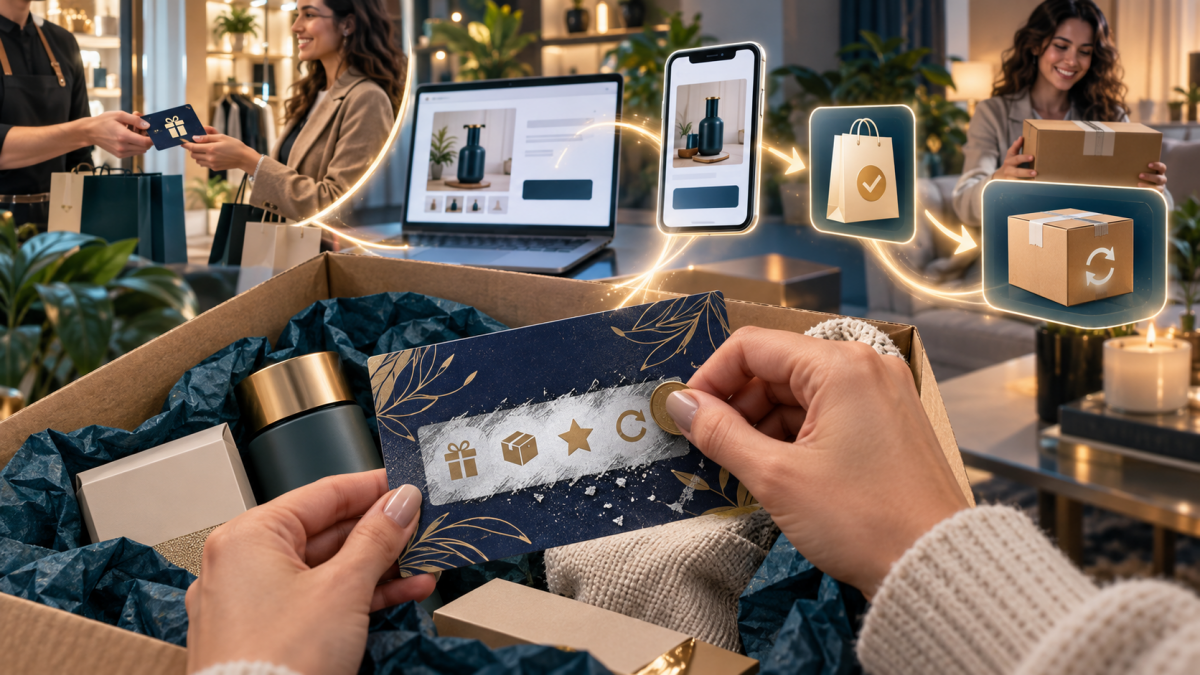
Retail runs on two things: getting the sale now, and getting the customer back. Scratch off cards do both. In-store, a mystery-discount card pulls shoppers to the register and nudges them to buy more to unlock their reveal. In e-commerce, a scratch card tucked into every package turns a one-time buyer into a repeat one. And because the reveal taps the brain’s reward centers, it drives engagement a flat “10% off” banner never will.
This guide is for retail and e-commerce operators ready to run a scratch-off promotion and looking for exactly how their channel uses them — the proven tactics, prize structures, and how to launch one that lifts conversions and repeat purchases.
Quick answer: How do retail and e-commerce brands use scratch off cards? Retailers hand out mystery-discount scratch cards at the register or entrance to pull shoppers in and raise average order value, since customers can only reveal their discount at checkout. E-commerce brands include scratch cards as package inserts revealing a discount or prize on the next order, turning one-time buyers into repeat customers. Both use them for loyalty rewards, win-back, holiday campaigns, and grand openings — every card wins something.
Why Scratch Off Cards Work for Retail & E-Commerce
Retail’s biggest challenge is grabbing attention and converting it — and scratch cards are built for exactly that:
- The reveal drives action. The act of scratching activates the brain’s reward centers, creating excitement that leads to higher engagement and stronger purchase intent. Retailers report that customers who play and win even small rewards are significantly more likely to complete their purchase in the same visit.
- They raise average order value. Because many promotions require a purchase to earn or redeem the card, they increase the average transaction — and mystery-discount cards nudge shoppers to buy the items they want now to unlock the reveal.
- They turn buyers into repeat customers. A scratch card revealing a next-purchase reward gives customers a concrete reason to come back, and repeat buyers are the engine of profitable retail.
- They deliver measurable lift. Interactive promotions like scratch cards generate 30–50% higher response rates than plain coupons or standard direct mail.
Major retailers have long used the tactic: JCPenney and Macy’s ran mystery-discount scratch-off campaigns to generate return customers, distributing cards in mail, newspaper inserts, and at checkout.
Do scratch off cards work for retail? Yes. The reveal activates the brain’s reward centers, and retailers report that customers who win even small rewards are significantly more likely to complete a purchase in the same visit. Scratch cards raise average order value (many require a purchase to redeem), drive repeat visits, and generate 30–50% higher response than plain coupons. Retailers from JCPenney to Macy’s use mystery-discount scratch campaigns.
The Mystery Discount: Retail’s Signature Tactic
The mystery discount is the most powerful in-store scratch tactic, and it works on a simple psychological hook: the customer is guaranteed something but must visit and buy to find out what.
Here’s how it runs: a shopper receives a mystery-discount card (by mail, insert, or at the door) guaranteeing a discount somewhere between, say, 10% and 50% off. They can’t scratch it before visiting. To reveal their discount, they bring the card to your store — intact — and can only remove the scratch layer after selecting their purchases and reaching the register. The discount applies only to what they’ve already chosen to buy.
This structure is especially powerful for larger-ticket items like furniture, electronics, and jewelry, where the guaranteed-minimum discount plus the chance of a bigger one seals the deal. Everyone loves the chance to win, and the guarantee of at least a base discount removes the risk for the shopper.
How does a mystery discount scratch card work in retail? The customer receives a card guaranteeing a discount (e.g., 10–50% off) but can only reveal it by visiting your store and scratching at the register, after selecting their purchases. The discount applies only to items already chosen. It pulls shoppers in, guarantees a base discount to remove risk, and the chance of a bigger reveal seals the sale — especially effective for big-ticket items like furniture and jewelry.
Scratch Off Ideas for E-Commerce
Online, the package is your storefront moment — and scratch cards make it work harder:
- Package inserts — include a scratch card in every order revealing a discount or free gift on the next purchase. This turns one-time buyers into repeat customers and encourages reviews and social shares.
- QR under the scratch panel — customers scratch, scan, and land on a loyalty portal, exclusive offer, or content page, bridging the physical package to your digital experience and capturing data.
- Win-back mailers — mail lapsed online customers a scratch card revealing a comeback offer.
- Cart-recovery hooks — a scratch reveal offered to complete a purchase.
- Unboxing moments — a branded scratch card elevates the unboxing experience and drives organic social buzz.
How do e-commerce brands use scratch off cards? The top tactic is the package insert — a scratch card in every order revealing a discount or gift on the next purchase, turning one-time buyers into repeat customers and driving reviews and social shares. Brands also put a QR code under the panel (scratch and scan to a loyalty portal or offer), mail win-back cards to lapsed customers, and use branded cards to elevate the unboxing moment.
More Retail Scratch Off Campaigns
- Loyalty rewards — a scratch card after a set number of purchases revealing the next reward tier.
- Customer appreciation days — exclusive scratch-off deals for loyal customers.
- Holiday and seasonal campaigns — scratch interest spikes around holidays (December peaks especially), so festive designs drive urgency and seasonal sales surges.
- New product launches — tie prizes to a new item to drive trial.
- Clearance events — add scratch savings to move inventory faster (retailers even use scratch promotions to move high-margin or high-tariff stock without slashing list prices).
- Grand openings and pop-ups — hand out scratch tickets revealing instant prizes to create buzz and collect emails.
The Best Prize Structure for Retail
Make every shopper a winner while protecting margin. A proven mix:
- 70% small prize — 10% off, a free add-on, or a small gift
- 25% medium prize — 20–25% off or a free product with purchase
- 5% grand prize — a large discount, a gift card, or a shopping spree
Offer a mix of smaller and larger prizes to create excitement, and design eye-catching cards with bold colors and your logo. The guaranteed-minimum discount removes shopper risk, while the rare grand prize creates the buzz and word-of-mouth. Always require the purchase (or a return visit) to redeem, so the promotion drives revenue rather than just giving away margin.
What prizes should a retailer put on scratch cards? Use a mix so every card wins: 70% small prizes (10% off, a free add-on), 25% medium (20–25% off or a free product with purchase), and 5% grand prize (a big discount, gift card, or shopping spree). Require a purchase or return visit to redeem so the promotion drives revenue. Design bold, branded cards, and always guarantee a base discount to remove shopper risk.
How to Launch a Retail or E-Commerce Scratch Promotion
- Set the goal — conversions, higher average order value, repeat purchases, or inventory clearance.
- Pick the tactic — in-store mystery discount, e-commerce package insert, loyalty reward, or seasonal campaign.
- Engineer the prizes — an “everyone wins” mix with a guaranteed base discount and a rare grand prize.
- Set clear rules — expiration date, redemption conditions (purchase required, applies to items chosen), and one-per-customer limits.
- Add tracking — unique codes or QR codes to measure redemption, AOV lift, and repeat-purchase rate.
- Distribute — at the register, at the door, by mail, or in every package.
- Measure and iterate — track conversion, average order value, and repeat purchases, then refine.
Get It Done: Just Scratch It
Retail and e-commerce promotions work best when the cards look professional, the prize structure protects margin, and every card is trackable — and Just Scratch It specializes in exactly that. It creates scratch-off cards for retail promotions, mystery discounts, package inserts, loyalty programs, and win-back campaigns, in both physical and digital form. Custom design is included in every order, matched to your brand, along with up to 10 prize tiers, unlimited scratch-off spots, prize-structure guidance to protect your margins, and variable data for trackable codes and QR reveals. It can produce in as little as 2 business days and drop-ship to up to 1,000 locations for multi-store retailers. With 20 years of promotion experience, it helps you build a promotion that lifts conversions without eroding your margins.
Frequently Asked Questions
How do retail stores use scratch off cards?
Mainly mystery-discount cards handed out at the register or entrance — shoppers can only reveal their discount by visiting and buying, which pulls them in and raises average order value. Retailers also use loyalty rewards, appreciation days, holiday campaigns, clearance events, and grand openings.
How do e-commerce brands use scratch off cards?
The top tactic is the package insert — a scratch card in every order revealing a next-purchase discount or gift, turning one-time buyers into repeat customers. Brands also use QR-under-the-panel reveals, win-back mailers, and branded cards to elevate unboxing.
Do scratch off cards work for retail?
Yes. The reveal drives purchase intent — customers who win even small rewards are significantly more likely to buy in the same visit — and interactive promotions generate 30–50% higher response than plain coupons. Retailers from JCPenney to Macy’s use them.
What is a mystery discount scratch card?
A card guaranteeing a discount (e.g., 10–50% off) that customers can only reveal by visiting your store and scratching at the register after selecting purchases. It removes shopper risk with a guaranteed minimum while the chance of a bigger discount seals the sale.
What prizes work best for retail?
A mix so every card wins: 70% small (10% off, free add-on), 25% medium (20–25% off or free product with purchase), 5% grand prize (big discount or gift card). Require a purchase to redeem so it drives revenue.
Can scratch cards increase average order value?
Yes. Because redemption typically requires a purchase, and mystery discounts apply only to items chosen at checkout, they nudge shoppers to buy more to unlock their reveal — raising the average transaction.
Are scratch cards good for e-commerce package inserts? Very. A scratch card in every order revealing a next-purchase reward is one of the most effective ways to turn a one-time buyer into a repeat customer, and it drives reviews and social shares at almost no added cost.
How do I track a retail scratch promotion?
Use unique codes or QR codes under the panel to measure redemption, average-order-value lift, and repeat-purchase rate. This turns the promotion into a measurable, repeatable channel.
When should retailers run scratch promotions?
Anytime you want to drive traffic or repeat purchases — but especially around holidays (scratch interest peaks in December), new product launches, clearance events, customer appreciation days, and grand openings.
Who should print retail scratch off cards?
A specialist like Just Scratch It, which includes branded design and margin-protecting prize guidance, offers physical and digital cards, supports variable data and QR tracking, and can drop-ship to multiple store locations.