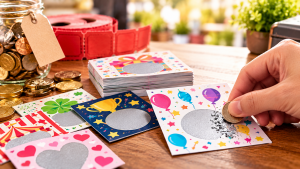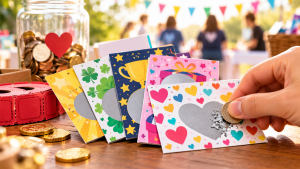
Making your own scratch off cards is genuinely one of the easiest crafts there is — a mix of paint and dish soap, a strip of tape, and about an hour of drying time is all it takes to turn any card into a little moment of suspense. Whether it’s a gift reveal, a classroom reward, a party game, or a small promotion, you can make a whole batch for a few dollars.
This guide walks through exactly how to do it: the proven paint recipe (with the right ratio), the step-by-step method, the no-paint shortcut, what a batch costs, and the handful of mistakes that ruin cards before anyone gets to scratch them. Everything here is drawn from tried-and-tested crafter tutorials, so you’re getting what actually works.
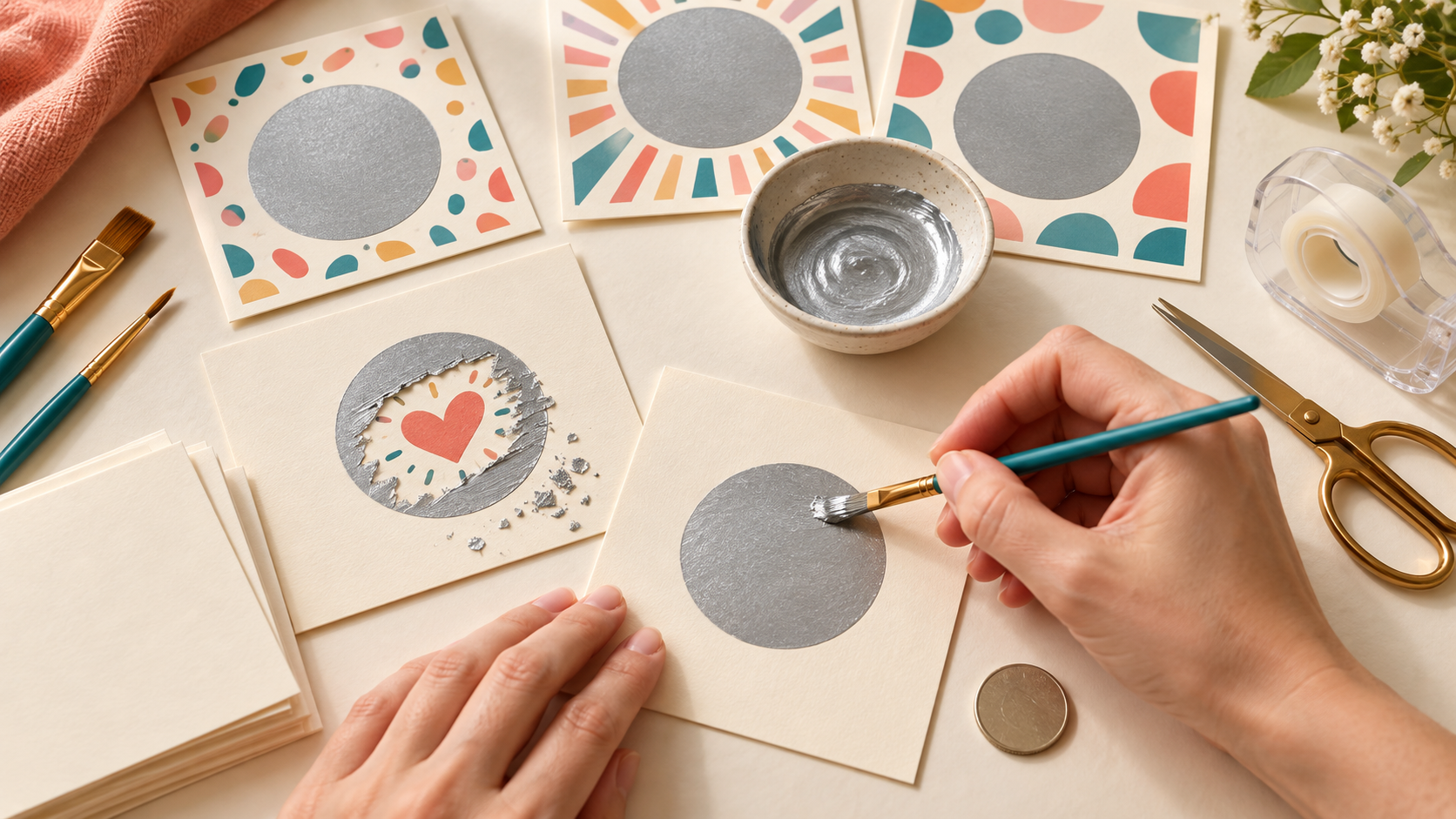
Quick answer: How do you make your own scratch off cards? Mix two parts metallic acrylic paint with one part dish soap. Print or write your hidden message on cardstock, cover just that area with clear packing tape or contact paper, then brush two to three thin coats of the paint mixture over the tape, letting each coat dry. The dish soap keeps the paint from bonding so it scratches off cleanly. A batch of 50 cards costs about $10–$20 in materials.
What You Need
Everything is cheap and available at a craft or dollar store:
- Cardstock (80–110 lb) — not thin paper, which warps and tears during coating
- Metallic acrylic paint — silver, gold, or copper looks most like a real scratch card (any color works)
- Liquid dish soap — regular hand dish soap
- Clear packing tape or clear contact paper — the essential barrier layer
- A foam brush — foam applies smoother, streak-free coats
- A small cup for mixing (cover it between coats so the paint doesn’t dry out)
The Scratch-Off Paint Recipe
This is the heart of the whole thing, and the ratio matters.
What is the scratch-off paint recipe? Mix two parts metallic acrylic paint to one part liquid dish soap (a 2:1 ratio). Stir until smooth. The dish soap dilutes the paint and keeps it flexible as it dries, so instead of bonding permanently it flakes off cleanly when scratched. Metallic silver, gold, or copper gives the most authentic look, but any acrylic color works with the same ratio.
The science is simple: acrylic paint alone would bond to the surface and never scratch off. The dish soap prevents that bond, keeping the dried paint just flexible enough to crumble away under a coin — but only when it’s applied over a slick, non-absorbent barrier (the tape), not bare paper.
Step-by-Step: Making Your Scratch Off Cards
- Design and print your card. Create your card with the hidden message, prize, or code where you want the scratch panel, and print it on cardstock. (Or write the message by hand with a permanent marker — never pencil, which leaves indentations that show through.)
- Cover the hidden area with tape. Cut a piece of clear packing tape or contact paper slightly larger than the message and press it down smoothly over just that spot. This is the one step you cannot skip — without the slick barrier, the paint soaks into the cardstock and won’t scratch off cleanly.
- Mix the paint. Combine two parts metallic paint with one part dish soap in your cup and stir until smooth.
- Apply the first coat. Brush the mixture over the taped area with your foam brush. It’ll look thin and patchy — that’s normal.
- Let it dry and add more coats. Wait about 30–40 minutes between coats. You’ll need two to four coats total until the message is completely hidden; the exact number depends on your paint’s opacity and how much soap you added.
- Let it cure fully. After the last coat, let everything dry completely (a couple of hours) before handling.
- Scratch to test. Use a coin — not a fingernail — for a clean reveal. Always test one card before you make a big batch.
Why won’t my homemade scratch off card scratch off? Almost always because the paint was applied directly to paper instead of over a slick tape or contact-paper barrier — paint bonds to cardstock and won’t budge. Other causes: too little dish soap (keep the 2:1 ratio), coats applied too thick, or not letting each coat dry. Add the barrier, thin your coats, and let it cure fully.
The No-Paint Shortcut: Scratch-Off Stickers
If mixing paint sounds like too much, there’s an even easier route. Write or print your hidden message, then cover it with a pre-made scratch-off sticker — a self-adhesive label with the scratch coating already applied. Peel, stick, done. It’s the fastest, most consistent method and needs no drying time or special stock. Stickers come in silver and gold circles, squares, and sheets you can cut to any shape.
How do you make a scratch off card without paint? Write your hidden message with a permanent marker, then cover it with a pre-made scratch-off sticker, pressing from the center outward to remove bubbles. No mixing, no drying — it’s the fastest and most reliable DIY method. Stickers are sold in rounds, squares, and full sheets, and all-in-one kits pair blank cards with matching stickers.
How Much Does It Cost to Make Scratch Off Cards?
DIY is cheap. A basic batch of about 50 scratch off cards costs roughly $10 to $20 in materials — cardstock, acrylic paint, dish soap, and packing tape — most of which you can reuse for future batches. Scratch-off stickers add a few dollars if you go the no-paint route. That low cost is exactly why DIY makes sense for a handful of personal cards.
Common Mistakes to Avoid
- Painting directly on paper. The number-one mistake — always apply the tape or contact-paper barrier first, or the paint won’t scratch off.
- Using thin paper. It warps and tears during coating. Use cardstock.
- Skipping the test card. Always make one before committing to a batch of 50 or 200.
- Writing in pencil or pen. Indentations and wet ink show through. Use permanent marker or printed text.
- One thick coat. Thick coats stay gummy and scratch poorly. Use thin coats with drying time.
- Too little dish soap. Without enough soap the paint bonds; keep the 2:1 ratio.
- Scratching with a fingernail. Use a coin for a clean reveal.
When to Make Your Own vs. Order Custom
DIY is perfect for a few dozen personal or small-scale cards — gifts, party games, classroom rewards, a limited promotion. It’s cheap, fun, and fully customizable.
But if you need hundreds or thousands of cards, or the cards represent your business or brand, DIY stops making sense. Hand-painting is slow and inconsistent, the coating isn’t tamper-proof, and the finish won’t look professional. At that point, custom-printed scratch off cards are cheaper per card at volume, perfectly even, and far more polished — with options like variable data (unique codes per card), custom scratch shapes and colors, and security coatings that DIY can’t match.
For anyone who reaches that point, Just Scratch It specializes in custom scratch-off cards for exactly this — a dedicated scratch-off company that includes design, offers both physical and digital cards, and handles everything from hundreds to millions. Use DIY for the personal and playful; use a professional printer for the branded and the bulk.
Should I make my own scratch cards or order custom? Make your own for a few dozen personal cards — it’s cheap ($10–$20 for 50), fun, and customizable. Order custom when you need hundreds or thousands, or when the cards represent your business, since professional printing is cheaper per card at volume, perfectly even, and offers unique codes, custom shapes, and security coatings DIY can’t match.
Frequently Asked Questions
How do you make your own scratch off cards?
Mix two parts metallic acrylic paint with one part dish soap, cover your hidden message with clear tape, and brush two to three thin coats over the tape, letting each dry. Or skip the paint and cover the message with a pre-made scratch-off sticker.
What is scratch-off paint made of?
Metallic acrylic paint mixed with liquid dish soap in a 2:1 ratio. The soap keeps the paint flexible so it flakes off cleanly instead of bonding — but only over a slick tape or contact-paper barrier.
What’s the best paint-to-soap ratio?
Two parts paint to one part dish soap. Too little soap and the paint bonds and won’t scratch; too much and it’s too thin to hide the message.
Why do I need tape under the paint?
The tape or contact paper is a slick, non-absorbent barrier. Without it, paint soaks into the cardstock and bonds permanently, so the panel won’t scratch off. It’s the one step you can’t skip.
What paper should I use?
Cardstock (80–110 lb), not thin printer paper, which warps and tears during coating. Cardstock also prevents the hidden message from showing through.
How many coats of paint do I need?
Usually two to four thin coats, until the message is completely hidden. Let each coat dry 30–40 minutes. The number depends on your paint’s opacity and soap ratio.
How much does it cost to make scratch off cards?
About $10–$20 in materials for a batch of 50 — cardstock, acrylic paint, dish soap, and tape — much of it reusable for future batches.
Can I make colored scratch-off areas?
Yes. Silver, gold, and copper look most like a real scratch card, but any metallic acrylic color works with the same 2:1 recipe.
Can I mail homemade scratch off cards?
Yes. Sticker-based cards are mail-safe; for painted cards, slip wax paper over the coating so it doesn’t stick inside the envelope.
When should I order custom instead of DIY?
When you need hundreds or thousands, or the cards represent your business. Custom printing (like Just Scratch It) is cheaper per card at volume and offers unique codes, custom shapes, and professional, even coatings.